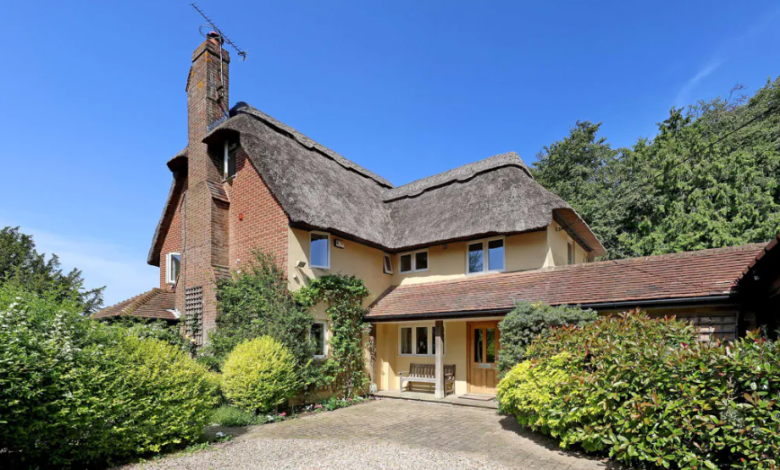
Whether you’re hoping to buy your first home here or you’re weighing up putting a property on the market, it pays to speak with High Wycombe’s property specialists before you make any big decisions. This is a town with a genuinely distinctive character, shaped by centuries of industry and a location that’s increasingly appealing to commuters, and understanding what makes it tick can make all the difference to how smoothly a sale or purchase goes.
A Town Shaped by Chairmaking
You can’t really talk about High Wycombe without mentioning furniture. The town became the epicentre of British chairmaking through the nineteenth century, and by 1875 it’s thought around 4,700 chairs were being produced here every single day. Factories from names like Ercol, Parker Knoll, and E Gomme once dominated the local economy so completely that the town’s football club still carries the nickname the “Chairboys” today. That legacy runs deeper than a bit of local trivia — plenty of the terraced housing dotted around the town was originally built to accommodate the workers who staffed those furniture factories, and buyers looking at older properties in and around the centre are often looking at homes with a direct link back to that industrial past.
Location That Works for Commuters and Families Alike
High Wycombe sits at the edge of the Chiltern Hills, along the River Wye, and its position on the fringe of the London metropolitan area has made it an increasingly attractive base for people who need to get into the capital regularly without paying central London prices. The town benefits from strong transport links, and its setting amid the Chilterns gives it a genuinely different feel to a lot of other commuter towns closer to the M25, with green space and countryside within easy reach even from fairly central postcodes. Buyers moving out of London tend to be drawn by exactly this combination: proximity without losing that sense of space, and sellers with properties near the edges of town, closer to the surrounding hills, are often in a strong position to capitalise on that appeal.
Understanding the Town’s Layout and History
High Wycombe’s town centre went through a substantial redevelopment in the 1960s, when the River Wye was culverted and much of the older Georgian and period architecture was cleared to make way for shopping centres, multi-storey car parks, and new road layouts. That means the centre itself has a more modern feel than some buyers expect from a town with such a long history, while the surrounding residential areas, many built up the hillsides during the furniture boom, retain much more of the older character. Knowing which parts of town offer period charm and which offer more contemporary housing stock is exactly the kind of detail a local specialist can walk you through before you even start viewing.
Notable Landmarks Worth Knowing
A few local landmarks come up again when discussing property in High Wycombe, and it helps to know what they refer to. Hughenden Manor, a Regency-period house on the northern edge of town, was for three decades the home of Benjamin Disraeli and is now looked after by the National Trust, drawing visitors and adding to the appeal of properties nearby. The town centre still holds onto its eighteenth-century Little Market House and Guildhall, survivors from before the 1960s redevelopment. And RAF High Wycombe, which has housed Royal Air Force commands since 1968 following its earlier role as the seat of RAF Bomber Command, remains a significant local employer and a point of reference for anyone trying to get their bearings around the area.
What Buyers Should Look Out For
If you’re buying in High Wycombe, it’s worth asking a few pointed questions depending on what part of town you’re considering. Period terraces built during the furniture-industry boom can be full of character, but older housing stock sometimes needs closer inspection for damp, insulation, or outdated wiring. Properties nearer the redeveloped town centre may offer more modern conveniences but less individual character. And homes on the edges of town, closer to the Chilterns, often carry a premium for the views and access to countryside, so it’s worth weighing that against your budget and commuting needs before committing.
What Sellers Should Emphasise
Sellers in High Wycombe have a genuinely compelling story to tell, and it’s worth making the most of it. A period property tied to the town’s furniture-making heritage carries real appeal for buyers who want character and history, not just square footage. Properties within easy reach of the town’s transport links should highlight the commuting advantage clearly, particularly for buyers relocating from London. And anything close to green space or the surrounding hills should lean into that contrast between accessible countryside and proximity to the town centre, since it’s precisely that balance that draws a lot of buyers here in the first place.
Why Local Knowledge Makes the Difference
Between the town’s unusual industrial heritage, its patchwork of older and more modern housing stock, and its position as a genuinely attractive commuter base, High Wycombe isn’t the kind of place where a generic, one-size-fits-all approach to buying or selling works particularly well. A specialist who knows which streets sit closest to the good transport links, which properties carry genuine period character worth paying for, and which areas are still finding their feet after the redevelopment decades of the last century can save both buyers and sellers a good deal of time and guesswork.
Ready to Make Your Move
Whether you’re drawn by the town’s rich furniture-making history, it’s convenient position near the Chilterns, or simply the practicalities of a good commute into London, High Wycombe has plenty to offer buyers and sellers alike. Getting proper local guidance before you commit, whichever side of the transaction you’re on, is the surest way to make sure you end up with a result that actually suits what you’re looking for.