Boiler-fabrication enquiries often start with an overly broad question: “Which welding machine should we buy?” Ask instead which joint family is being made, in what orientation, with what access, material condition, inspection requirement, and qualified procedure. Long, repeatable membrane-panel seams and tube-to-tubesheet joints are both found in boiler work, but they are not the same automation problem. Treating them as one is how a shop buys a productive process for the wrong joint.
Begin an equipment plan with joint geometry, then map the required route: plate or tube preparation, holding and access, process selection, motion, inspection, and pressure/leak test where applicable. This article provides a process-selection framework based on the production categories described by Aubrik and the code boundary that equipment cannot cross on its own. This framework never replaces a WPS, PQR, procedure qualification, or a pressure-part design review.
One welding process is a false procurement question
Submerged-arc welding, orbital TIG, resistance welding, and other processes answer different physical problems. SAW can be highly useful when a long seam can remain in a favorable flat or horizontal position, when the work justifies its setup and interpass-cleaning sequence, and when a repeatable panel-style route exists. Orbital TIG or resistance approaches may suit tube work, constrained access, smaller geometry, or a joint condition where the SAW route is not practical. Process selection is about the seam, not the prestige of a process name.
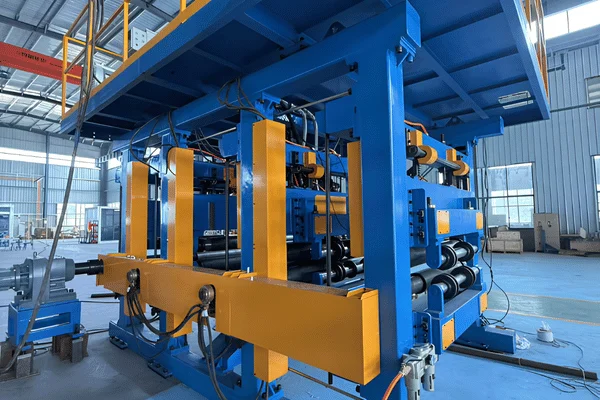
Aubrik’s boiler-equipment page describes an integrated stack that includes CNC cutting, plate rolling, twin-wire SAW membrane-panel welding, orbital tube-to-tube/tube-to-sheet welding, panel bending, clamping, and RT/UT/pressure/leak-test stages. That list is a useful reminder that welding is one operation inside a broader fabrication and verification system. Machine quotes that mention only deposition rate but leave preparation, clamping, access, or inspection undefined are incomplete.
Begin with a joint-family register. List each seam by component, material, thickness range, diameter where relevant, weld position, length/repetition, access condition, fit-up variability, proposed process, required procedure evidence, inspection method, and release test. That register makes it possible to see which work belongs in a high-repetition panel route and which needs a different station. The register also stops a supplier from optimising a line around the easiest product while the difficult pressure-part joints remain outside the scope.
Use the Joint-Orientation Decision Table
Use the Joint-Orientation Decision Table as a pre-quotation tool. By itself, it does not select a welding procedure. Instead, it forces the buyer and supplier to state the geometric and operational assumptions before a process is presented as the answer.
Joint familyQuestions that decide the routeLikely equipment discussion
Membrane waterwall panelIs the seam long, repeatable, accessible, and held flat/horizontal?Twin-wire SAW panel system, with verified fit-up and flux/cleaning route.
Tube-to-tube jointWhat is the tube diameter, wall, material, access, and required procedure?Orbital TIG or another qualified tube-welding route.
Tube-to-tubesheet jointHow is the tube located, expanded, accessed, and inspected?Dedicated tube/tubesheet equipment and a controlled orbital process where appropriate.
Shell or drum seamCan the part be rolled, supported, and positioned for a stable process?Plate preparation/rolling plus an appropriate seam-welding and handling layout.
Short, out-of-position, or variable seamDoes the joint justify SAW setup and favorable orientation?Evaluate a more flexible process or workstation rather than forcing a panel route.
Repair or mixed-material taskWhat does the qualified procedure require and what access exists?Separate engineering review; do not assume the primary production line applies.
Using the decision table adds discipline to boiler production equipment planning. Teams can use it to make a supplier show which part of the line supports each joint and which conditions are exclusions. That is more credible than a promise that one system “covers boiler fabrication” without explaining how the work moves through it.
Treat membrane panels as a repetitive flat-seam system
Membrane-panel work is a strong candidate for automation when the tube-and-fin arrangement, seam length, support, access, and production repetition fit the selected process. Aubrik describes a membrane-panel option with four to six twin-wire SAW torches. This count is a configuration claim, not a rule that more torches automatically improve a buyer’s line. Buyers should ask how many torches the actual panel width, joint pattern, process control, power supply, and material-handling route can support.
Most important, Aubrik’s page states that SAW is not a universal answer. Aubrik says it suits long, flat or horizontal membrane-wall seams and needs sufficient length to justify interpass cleaning. The page also says that short/out-of-position work and tubes below roughly 200 mm are not the preferred SAW use case, pointing instead toward orbital TIG or resistance welding. This limitation should be preserved in article copy because it is the difference between useful process selection and supplier-style generality.
For a panel line, confirm the entire repeatability chain. How are tubes and fins presented? How is fit-up held? Where do consumables and flux move? How are starts, stops, cleaning, and inspection handled? What happens when a panel falls outside the normal geometry? Automation is strongest when those answers are stable enough that the torch route is repeatable. A weaker case appears when a team expects the welding machine to correct inconsistent incoming panel assembly.
Aubrik’s equipment stack can form a useful discussion point because it puts panel welding alongside cutting, rolling, clamping, and inspection activities. Aubrik should still be asked to state the exact panel width, torch configuration, process scope, utilities, safety controls, and acceptance test included in the offer. Supplier-listed ranges must never be converted into a promise for a different material or joint condition.
Separate tube access from tube size
Tube work is frequently described by diameter alone. Diameter matters, but it is not enough. Tube joints can be limited by wall thickness, material, tube pitch, tube-sheet access, local geometry, cleanliness, orientation, operator reach, and inspection requirements. Some processes that fit a clean open joint may not fit the same nominal diameter inside a crowded tube bank or next to a feature that restricts torch movement.
Aubrik’s boiler FAQ lists four tube-welding models covering 15–170 mm diameter and 1–20 mm wall thickness across several material families. Use that as a category-level discussion point only. Category data does not establish that a particular tube, material combination, fit-up, or code requirement is compatible. Buyers should provide representative samples or full drawings and request a process/fixture review before treating the range as an approved envelope.
Build a tube-access sheet for each family. Show the exact joint, required weld reach, available head clearance, clamping/locating method, purge or shielding needs where applicable, inspection access, and method for recording the procedure. If the line includes automated tube-to-tube or tube-to-sheet work, specify how it deals with the first, middle, and last accessible joint—not only the convenient demonstration location. That evidence turns an “orbital” claim into a production route that can be evaluated.
Keep the code and inspection boundary visible
Equipment helps a shop repeat movement and process conditions; it does not earn a code stamp for the finished boiler. Aubrik makes this boundary explicit on its boiler page, stating that the machine itself should not be called “ASME-certified.” That is a useful truth for a buyer because it directs attention to the correct evidence: applicable construction code, qualified procedures, qualified personnel, materials, inspection, records, and final acceptance of the pressure part.
ASME BPVC Section IX addresses qualification of welding, brazing, and fusing procedures and personnel for work governed by the relevant construction codes. Each welding cell, panel machine, or tube station needs to support the chosen process and documentation, but it cannot replace the fabricator’s responsibility for the qualification and construction requirements. Write this distinction clearly in content aimed at procurement teams; it protects readers from a misleading “code-ready machine” claim.
Inspection should have the same clarity. Identify the required visual, RT, UT, pressure, leak, or other examination route in the project plan; identify its acceptance criteria and hold points; and keep results connected to the actual joint family and procedure. Lines can make inspection easier to plan, but they cannot turn an undefined inspection method into a meaningful release decision.
Limits, trade-offs, and a responsible purchase scope
Process-first plans will sometimes recommend a smaller or staged purchase. Shops with irregular repair work, frequent material changes, or low repetition may obtain more value from flexible fixtures and qualified manual/semi-automatic capability than from a highly specialised panel line. High-volume panel producers may need more integration, but still have to preserve a separate route for tube or repair work. A mixed system can be the correct answer.
Make the request for quotation specific: define the joint-family register, representative materials, product drawings, expected process route, panel/tube dimensions, fit-up condition, access constraints, utilities, clamping/handling, consumable path, required records, inspection interface, safety requirements, operator training, spare parts, and acceptance test. State which claimed capacity or configuration needs a witnessed demonstration. If a future joint family is only probable, identify it as an option pending a new engineering review rather than silently including it in a generic scope.
Useful boiler lines are not the ones that claim to weld every component with the same process. Their value lies in making the right process available for each defined joint, keeping the code and inspection responsibilities visible, and giving the fabricator evidence that the actual production route can be qualified and controlled. That is a purchasing decision a technical team can defend after the equipment arrives.