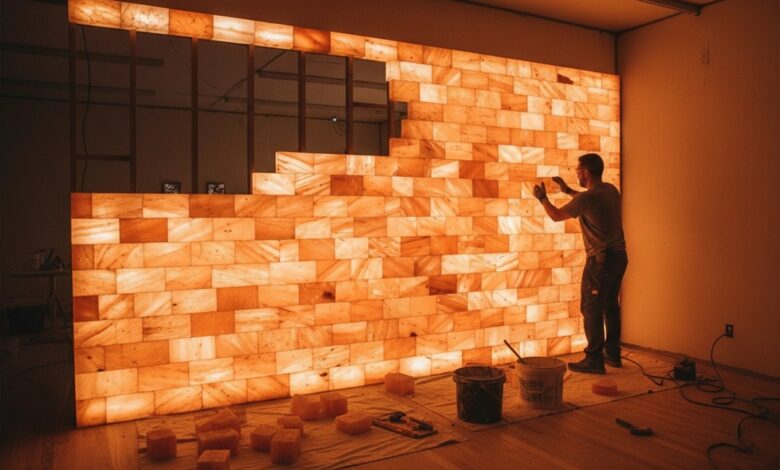
A salt wall sauna sounds simple at first. Just a sauna with a salt wall, right? But once you actually start planning one, things get a bit more detailed. Not complicated, but definitely not as basic as it sounds.
There are choices. Materials. Placement. Even though the wall interacts with heat. And if those things are not thought through properly, the sauna still works, but it does not feel right.
So this guide stays focused on one thing: how to build a salt wall sauna that actually works the way people expect it to.
Why a Salt Wall Sauna Feels Different from a Regular Sauna
A regular sauna mostly focuses on heat. That’s the main element. A salt wall sauna adds another layer to that experience. The usage of Himalayan salt tiles softens the feeling of the heat in the room. It becomes milder, more distributed, and it becomes possible to spend a longer amount of time in such conditions. It is about making the environment feel more balanced. And that difference becomes noticeable after a few sessions, not instantly.
Key Benefits of a Salt Wall Sauna
The benefits are not loud or immediate. They show up over time.
Here are the main ones people actually notice:
- The heat feels more even across the sauna, instead of strong in one area and weak in another
- Breathing inside the sauna feels less dry and slightly more comfortable
- The overall environment feels calmer and less aggressive on the body
- Sessions tend to last longer because discomfort reduces
- The space looks more natural without feeling overly designed
Himalayan salt tiles play a big role here. They help spread the effect across the wall, instead of keeping it limited to one section.
So the benefit is not just in the material, it is in how that material is placed and supported.
How to Install a Salt Wall Sauna Properly
These are the areas where most people tend to make their biggest mistakes. It’s actually not difficult, but it requires a lot of work and dedication. Doing it in haste often causes problems with evenness or in the future.
This is what happens during the installation process:
- First, the base wall is prepared. It needs to be stable and able to handle the weight of a Himalayan salt wall for sauna
- Then, structural support is added. This ensures that the salt wall does not shift over time
- Himalayan salt tiles are arranged carefully. Alignment matters more than perfection
- Spacing is maintained between tiles to avoid pressure buildup
- Lighting (if used) is installed behind or around the wall before final fixing
- Final adjustments are made slowly to ensure the surface feels even
Each step may seem small, but together they decide how the sauna will perform later. A rushed installation might look fine at first. But over time, the difference becomes clear.
Design Choices That Actually Matter
Design in a Himalayan salt wall in a sauna is not just about appearance. It affects how the space feels. The placement of Himalayan salt bricks, the size of the wall, and even the lighting direction all change the experience.
A large wall creates a stronger presence. A smaller one feels more subtle. Warm lighting makes the wall feel deeper. Harsh lighting makes it look flat. Most people overthink decoration and ignore placement. But placement is what shapes the environment.
Where to Place a Salt Wall Sauna at Home
Location matters more than expected.
Salt bricks for sauna should not be placed randomly.
It works best in areas where:
- The temperature can be controlled and consistent
- Moisture does not fluctuate suddenly
- The space allows proper ventilation without direct exposure
- There is enough room for the wall to “breathe” and not feel cramped
- Usage will be regular, not occasional
How Himalayan Salt Tiles improve the Setup
Himalayan salt tiles are used not only as decoration but also to improve the stability of the whole installation. When these tiles are absent, the wall of your sauna will likely be unbalanced. But when present, these tiles provide stability and homogeneity of the wall. They help stabilize the entire salt bricks for sauna wall system. Without them, the wall may feel uneven in terms of heat and structure. With them, the surface becomes more consistent.
What is more, Himalayan salt bricks also make the distribution of the heat even, hence eliminating the effect of being uncomfortable when sitting near the heater.
Common Mistakes People Make
Most issues with a salt wall sauna are not about the material. They come from small oversights. People often rush the installation. Or ignore alignment. Or place the wall in a space that is not suitable.
Some expect instant results and get disappointed when the change feels slow. But this setup works gradually. And when done properly, it stays consistent for years.
What to Expect Over Time
A salt wall sauna does not show its full value on day one. The first few uses might feel similar to a regular sauna.
Then slowly, differences appear. Breathing feels easier. The heat feels less aggressive. The space feels calmer. Little by little, improvements make a difference. This principle works exactly this way.
Conclusion
Using a salt wall in a sauna is not just a visual choice. It changes how the space actually works. It affects how the heat feels and how the environment settles over time. That is why a sauna can still function without Himalayan salt tiles, but it often feels slightly incomplete.
Common mistakes people make. Because of this, Himalayan salt bricks and tiles play a key role in keeping the wall stable and working the way it should.
When put in place and used properly, the result is that it is not about instant change. It is about steady improvement that builds with every use.
FAQs
1. Is a salt wall sauna better than a regular sauna?
This makes for a more balanced environment, especially in longer sessions where the temperature must remain constant.
2. Do you need to have Himalayan salt bricks installed?
Not entirely necessary, but they will contribute to making sure the structure stays solid and uniform.