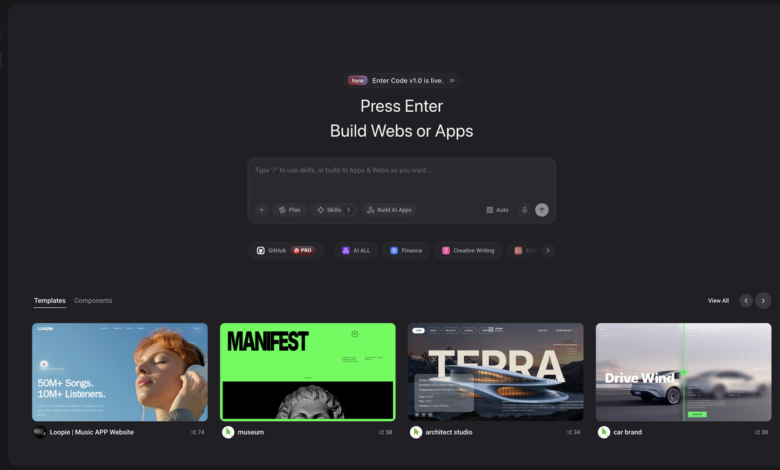
Software engineering looks a lot different this year. Launching a digital product used to require months of manual programming, dealing with syntax errors, and managing complicated cloud infrastructure. Now, agentic coding is becoming the standard. This method allows founders, marketers, and product managers to use autonomous systems for backend and frontend development. Whether you want to launch a SaaS platform, a digital game, or an e-commerce store, using an AI code generator helps turn natural language instructions into functional applications. Instead of getting stuck on technical details, teams can focus on what the product actually does. Enter Pro is a comprehensive no-code development agent built to help you create, launch, and scale digital products faster. Here are 7 ways. This approach alters the software development lifecycle and makes app development more accessible.
1. Bridging the Technical Gap with Vibe Coding
One of the main hurdles for non-technical founders is turning an idea into a working application. A modern AI code generator addresses this issue through a concept known as vibe coding. This changes how we think about software creation. Instead of worrying about logic loops, API connections, or database queries, you guide the process by describing your ideas and refining your text prompts. The system handles the underlying code generation. You do not need programming experience or knowledge of specific JavaScript frameworks. The focus moves entirely to product design, user experience, and business strategy. Using visual editors alongside autonomous generation lets teams iterate on their concepts. You can type in what you want, see a preview, adjust your phrasing, and turn a blank page into a published product quickly.
2. Deploying Complete Multi-Agent Systems
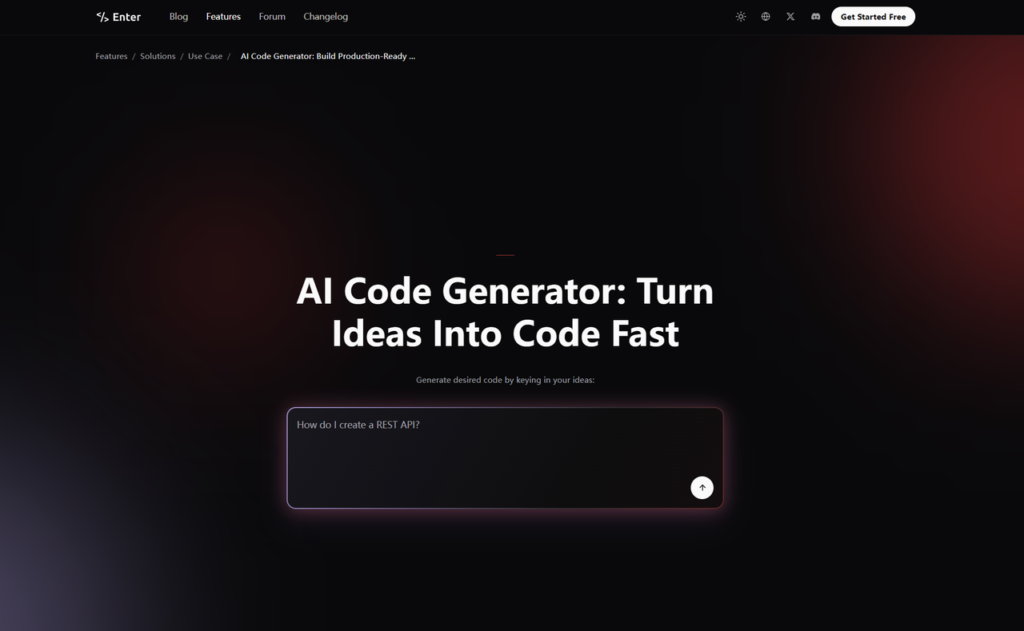
Building a simple single-page app is straightforward, but setting up a scalable system means getting different parts to work together smoothly. Modern development environments, such as Enter Pro, use multi-agent systems to handle these complex workflows. Instead of relying on a single script to run tasks one by one, specialized agents collaborate to build your product. For example, if you are building a project management app, one agent can handle the frontend layout, another can set up the database, and a third can manage user logins. Having these processes run simultaneously removes a lot of the usual manual effort. It allows builders to launch reliable software with the right architecture much faster than a traditional engineering team could plan and build the same infrastructure.
3. Instant Access to Integrated Cloud Services
In the past, building a full-stack application meant managing several separate and highly technical services. You had to connect a managed database, handle file storage, and set up environment variables across different cloud hosting platforms. Current agentic platforms integrate these backend services directly into the build process from the start. With a unified cloud setup, users get direct access to managed databases, edge functions, object storage, and secrets management. Everything is available from the exact same interface used to build the frontend, and you control it through your autonomous agent. This setup reduces deployment friction and makes sure your infrastructure scales properly as your user demand increases, without requiring you to hire a dedicated DevOps engineer.
4. Accelerating Product Demos and Prototyping
Getting stakeholder buy-in or early customer feedback usually means you need a working prototype. Flat mockups and wireframes just don’t show how a digital product actually behaves. No-code agents change this by letting teams build live, interactive demos without writing code. You just give it the basic requirements and user flows, and it generates a functional interface. Users can click buttons, navigate menus, and enter data right away. This speeds up the whole feedback loop. It also makes sure that when it is time to scale, everyone is on the same page, looking at a working model rather than guessing from static designs.
5. Building E-Commerce and Visual Design Faster
New development tools are completely changing how businesses build their online storefronts. Whether you need a standard website or a complex shop dealing with high traffic and heavy inventory, modern site builders take a lot of the friction out of digital commerce. You can put together a custom layout, tweak your product pages, and hook up payment gateways in a fraction of the usual time. If you need specific add-ons—like customer account portals, dynamic pricing tables, or automated abandoned cart emails—you just prompt the system to create them. These platforms can even look at current market data to recommend layouts proven to convert visitors into buyers. Because of this, your storefront is ready to handle actual sales and marketing the second you publish it.
6. Collaborative Environments for Cross-Functional Teams
Building software is rarely a one-person job. Good digital products usually happen when designers, marketers, founders, and operators actually work together. Current no-code tools act as shared workspaces where people from different departments can jump in at the same time, even if they don’t have technical backgrounds. A marketer can put together a landing page for an upcoming campaign, a designer can adjust the layout, and a founder can track progress—all from the same dashboard. This setup cuts down on endless back-and-forth messages and prevents teams from working in isolated silos. It keeps the whole group on the same page and lets everyone add something directly to the final app.
7. Empowering Internal Operations and Specialized Tooling
While customer-facing apps get a lot of attention, the internal tools that run day-to-day operations are just as important for a business. Intelligent agents make it easier to build custom tools tailored specifically for human resources, finance, and internal management. For instance, HR departments can simplify onboarding by generating employee portals that manage documents, training schedules, and team introductions. Sales teams can build custom CRM dashboards that track their specific metrics instead of relying on rigid, off-the-shelf software. By reducing the reliance on a busy IT department, internal teams can create specific solutions that solve their operational issues. This drives better organizational efficiency and daily productivity.
Conclusion
Software engineering looks very different in 2026. Agentic workflows and autonomous tools are now standard parts of a regular business toolkit. They handle the repetitive parts of coding, which frees up creators to focus on usability and solving actual problems. It doesn’t really matter if you are a founder without a tech background or a product manager trying to fix company operations; using an AI code generator is simply a practical choice. It has never been easier to get started, and the quality of the software you can build is much higher now. Creating complex digital products really just comes down to communicating clearly and iterating quickly.