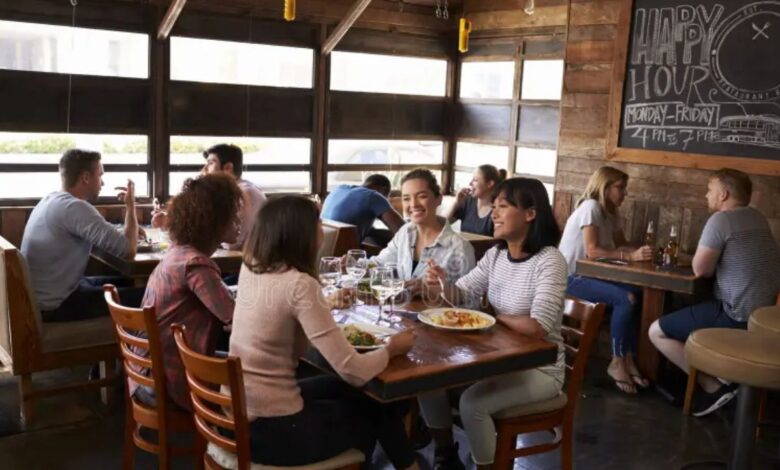
Walk into a busy restaurant today and very little appears unusual. The tables are set, the staff move between guests with familiar rhythm, and the kitchen hums with controlled urgency. On the surface, it looks like the same environment people have known for decades. Yet beneath that routine, a quiet transformation has taken hold, one that rarely announces itself but touches nearly every decision made before a plate reaches the table.
Artificial intelligence did not arrive in restaurants with a dramatic reveal. There were no sudden waves of robots replacing waiters or chefs. Instead, it slipped in through systems already in place: reservation platforms, ordering software, delivery integrations, and analytics dashboards. Each update brought a small layer of automation, then a little more intelligence, until those systems began to guide decisions rather than simply record them.
Customers rarely notice because AI operates behind the scenes. It adjusts stock levels before shortages occur, shifts staffing patterns before queues form, and nudges menu visibility in subtle ways. A diner may feel that service was smoother or that the wait time was shorter, but they rarely connect that feeling to algorithmic decision-making.
What makes this shift significant is not visibility, but control. Restaurants are no longer relying solely on instinct and past habits. Instead, they are building daily operations on patterns extracted from data, often in real time. The dining room still feels human, but the thinking behind it has changed.
The Kitchen Learns to Predict, Not React
For most of modern restaurant history, kitchens ran on a mix of experience, routine, and educated guesswork. Chefs learned patterns over time. Fridays were busy, rainy days slowed foot traffic, and certain dishes sold better during particular seasons. Even the most skilled operators accepted a degree of unpredictability.
AI has tightened that uncertainty. Kitchens now receive forecasts built from layers of data: historical sales, weather conditions, local events, delivery trends, and even social media signals. Instead of asking what might happen tonight, managers can see what is likely to happen within a narrow margin.
This shift has changed preparation. Rather than overproducing dishes to avoid running out, kitchens prepare closer to actual demand. Ingredients are ordered with more precision, reducing waste that once felt unavoidable. The difference is not dramatic in a single shift, but across weeks and months it alters cost structures in a meaningful way.
It has also reshaped timing. Prep schedules are no longer static. AI systems suggest when certain ingredients should be prepped, when ovens should be loaded, and when staff should begin specific tasks. The kitchen becomes less reactive and more anticipatory, adjusting its rhythm before pressure builds.
This does not remove the role of the chef. Instead, it changes the nature of that role. Decision-making shifts from instinct alone to a balance between instinct and insight. Some chefs embrace this quickly, seeing it as a tool that sharpens their judgment. Others resist, wary of losing the intuition that defines their craft. Either way, the kitchen is no longer operating in the dark.
Menus That Quietly Change Without Being Rewritten
A printed menu once represented stability. Prices and offerings remained fixed for long stretches, changing only with seasonal updates or major revisions. Today, that stability has loosened, even when the physical menu looks unchanged.
AI has introduced a more fluid approach to pricing and presentation. Digital menus, delivery platforms, and even in-house ordering systems allow restaurants to adjust prices based on demand, time of day, and external conditions. A dish might cost slightly more during peak hours or be promoted more heavily during quieter periods.
These adjustments are rarely obvious. The goal is not to shock customers, but to guide behaviour. A restaurant might push certain dishes forward in digital menus when ingredients are abundant, or reduce visibility when stock is limited. Over time, these small shifts influence ordering patterns in ways that benefit the business without disrupting the dining flow.
Delivery platforms have accelerated this trend. Their algorithms already rank restaurants, highlight deals, and adjust fees. Restaurants operating within these ecosystems have learned to respond, using AI tools to align their pricing and promotions with how those platforms function.
There is tension here. Some diners are uneasy with dynamic pricing, particularly when it feels hidden. Restaurants must balance financial optimisation with a sense of fairness. If adjustments become too aggressive, trust erodes. The most successful operators treat AI as a guide rather than a free pass to push prices to the limit.
The Front of House Becomes Smoother, Not Louder
If the kitchen has become more predictive, the front of house has become more seamless. AI has reduced friction in areas that once relied heavily on manual coordination.
Reservations are a clear example. Modern systems do more than book tables. They analyse no-show rates, average dining durations, and guest preferences. They suggest seating arrangements that maximise capacity without creating a rushed atmosphere. They adjust waitlists dynamically, offering more accurate estimates than staff could provide on their own.
Table management has also changed. Instead of static layouts, seating plans adapt throughout the day. AI tools suggest where to place incoming guests based on expected turnover times. The aim is to keep the dining room balanced, avoiding clusters of tables that finish at the same moment and overwhelm staff.
Customer interaction has shifted as well. Chatbots and automated responses now handle a significant portion of enquiries, from booking confirmations to dietary questions. Voice systems are beginning to appear in certain environments, particularly in quick-service settings. These tools reduce the workload on staff, allowing them to focus on in-person service.
Personalisation has quietly improved. Returning guests may find that their preferences are remembered, from seating choices to favourite dishes. Recommendations feel more relevant, even if the diner is unaware of the data behind them.
The overall result is not a louder or more technological dining room. It is a smoother one. Delays shrink, communication improves, and small frustrations fade. The technology remains in the background, doing its work without drawing attention.
The Workforce Changes Shape, Not Just Size
Much of the conversation around AI in restaurants centres on job loss. The reality is more nuanced. While certain repetitive tasks have been reduced or automated, the workforce has not simply shrunk. It has shifted.
Order taking, scheduling, and inventory tracking once required significant manual effort. AI has streamlined these areas, reducing the need for staff dedicated solely to those tasks. At the same time, new responsibilities have emerged. Restaurants now need people who understand systems, interpret data, and manage digital tools.
Scheduling provides a clear example. Instead of managers building rotas by hand, AI systems generate schedules based on predicted demand, staff availability, and labour costs. Managers still review and adjust these schedules, but the starting point is far more refined. This changes the role from creator to editor.
Staff on the floor are also affected. With fewer administrative burdens, they can focus more on direct interaction with guests. However, they are expected to work within a more structured environment, guided by systems that track performance and efficiency.
There is a cultural shift as well. Teams must adapt to working alongside technology that influences decisions. For some, this brings clarity. For others, it introduces a sense of constraint. Leadership plays a key role in how this balance is managed.
Training has become broader. Employees are not just learning service techniques or kitchen skills. They are learning how to interact with systems, interpret alerts, and understand the logic behind certain decisions. The modern restaurant worker operates in a hybrid role, blending traditional hospitality with digital awareness.
Restaurants Begin to Think Like Tech Companies
As AI tools spread, restaurants have started to resemble data-driven businesses rather than purely physical ones. The shift is subtle, but it changes how decisions are made at every level.
Customer data is at the centre of this change. Restaurants now track not only what people order, but when they order, how often they return, and how they respond to promotions. Loyalty programmes have evolved from simple discount systems into channels for gathering behavioural insight.
This data feeds into central dashboards where managers can see patterns that were once hidden. They can track which dishes perform best at specific times, which promotions drive repeat visits, and how different customer segments behave. Decisions become less about intuition and more about interpretation.
Integration plays a major role. Reservation systems, point-of-sale platforms, delivery apps, and marketing tools are increasingly connected. Data flows between them, creating a more complete picture of the business. This interconnected structure allows AI to operate across the entire operation rather than within isolated systems.
There are risks. Heavy reliance on data can lead to over-automation, where decisions lose their human context. Not every pattern should be followed blindly. Restaurants that rely too heavily on algorithms risk flattening their identity, turning unique spaces into predictable ones.
The most balanced operators treat data as a lens, not a rulebook. They use it to inform decisions while preserving the character that draws people in.
What Remains Human, and Why It Still Matters
For all the changes AI has introduced, the core of dining remains rooted in human connection. Technology can refine operations, but it cannot replicate the atmosphere created by people, design, and shared moments.
The layout of a space still matters. Whether guests sit at communal tables, by the window, or in more intimate settings like restaurant booths, the physical environment shapes how they feel. AI can suggest seating arrangements, but it cannot create the emotional tone of a room.
Conversations between staff and guests remain central. A well-timed recommendation, a genuine greeting, or a small gesture of attention carries weight that no system can replace. These interactions are not easily reduced to data points.
Food itself resists full automation. While AI can assist with preparation and consistency, the creativity behind a dish still comes from human hands and minds. Chefs draw on memory, culture, and experimentation in ways that extend beyond algorithmic logic.
There have been attempts to push automation further, with robotic kitchens and fully automated service models. Some have gained attention, but few have sustained long-term success in environments where people seek more than convenience. Dining is not only about efficiency. It is also about presence, mood, and connection.
The future of restaurants is unlikely to be fully automated. Instead, it will continue along the current path, where AI operates quietly in the background while the visible layer remains human.
A New Kind of Restaurant, Hidden in Plain Sight
The modern restaurant looks familiar, but it operates on a different foundation. Decisions that once relied on memory and routine are now guided by patterns drawn from vast amounts of data. Systems anticipate demand, adjust pricing, manage staff, and refine service in ways that were not possible a decade ago.
What makes this transformation distinctive is its subtlety. There are no dramatic markers signalling that a restaurant has adopted AI. The change reveals itself through smoother operations, more consistent service, and fewer visible disruptions.
For diners, the result is a setting that feels unchanged yet functions differently. For operators, it is a shift in how they think, plan, and adapt. The restaurant is no longer just a place where food is prepared and served. It is a network of decisions, many of which are shaped by intelligence that remains out of sight.
This quiet evolution is still unfolding. As tools become more advanced and data becomes more integrated, the gap between what diners see and what actually drives the operation may widen further. The challenge for restaurants will be to maintain their human character while navigating an increasingly data-driven world.
The balance is delicate. Lean too far into automation, and the space loses its personality. Ignore the tools available, and the business falls behind. The most compelling restaurants will be those that manage to blend both, allowing technology to support their identity rather than replace it.