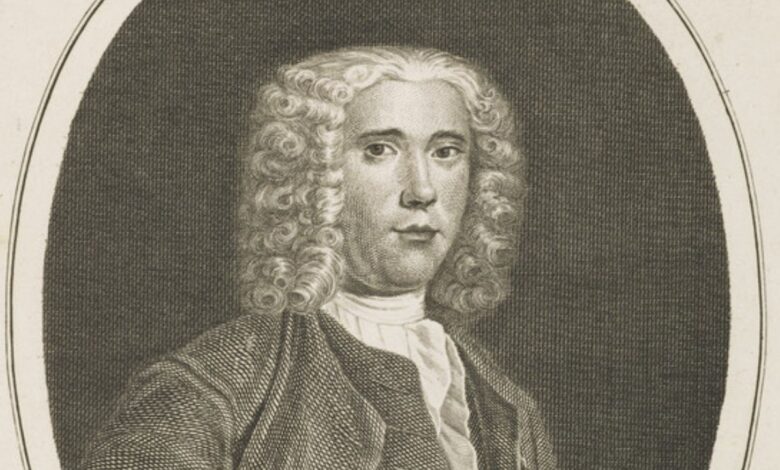
Have you ever met someone who could do everything — teach, invent, write, and inspire?
Well, Benjamin Martin was one of those people. He lived in the 1700s, a time when science was still growing and English dictionaries were just beginning to take shape. But instead of choosing only one path, Benjamin Martin followed all his interests — from words to lenses — and left a mark in both language and science.
Let’s step back in time and see who this amazing man was and how he became one of the brightest thinkers of his century.
A Humble Start with Big Dreams
Benjamin Martin was born in 1704 in a small English village called Worplesdon, Surrey. Life wasn’t easy back then, and young Benjamin started out as a ploughboy — basically, a farm helper. But he was curious, and curiosity changes everything.
He didn’t come from a rich family, but his love for learning pushed him forward. When he grew up, he became a teacher, sharing knowledge about math and science. A small legacy of £500 later helped him buy books and instruments, and that changed his life completely.
With those tools, he began to teach not just in classrooms, but to anyone who would listen. He became known as a lecturer on natural philosophy — what we now call science. Imagine someone today who explains new discoveries on YouTube — Benjamin Martin did that in the 1700s, but with real experiments and instruments in front of live audiences!
Discovering a World of Science and Ideas
In 1737, Benjamin Martin wrote his first big book, Bibliotheca Technologica. It was like a mini encyclopedia of natural philosophy, covering everything from physics to astronomy. He wanted people to understand how the world worked, and he explained things in a simple way, not just for scholars but for everyday readers.
A few years later, he moved to Fleet Street in London, right near the Royal Society, where many great scientists, including Isaac Newton, shared their ideas. This was a huge step for him. Fleet Street was the heart of learning and invention. It’s where Benjamin Martin opened his own shop and began creating scientific instruments — things like lenses, quadrants, and early optical devices.
Can you imagine walking down the street in 1740 London and seeing a man selling handmade telescopes and microscopes while also writing books about science? That was Benjamin Martin — part scientist, part businessman, and full-time dreamer.
Benjamin Martin and the Magic of Microscopes
One of Benjamin Martin’s biggest passions was the microscope. In those days, microscopes were still pretty basic. They were hard to use and gave blurry images. But Martin believed they could be much better.
In 1738, he built what he called the First Universal Microscope. It was simple, flexible, and easy to carry — something no one had done before. He wanted people to be able to explore tiny worlds wherever they were.
Then, in 1742, he introduced the Second Universal Microscope, an improved version with better stability and smoother adjustments. Instead of using threaded parts that could get stuck, this new version had a sliding stage and a strong wooden base. It was a big improvement and showed how thoughtful his designs were.
He didn’t stop there. Benjamin Martin kept working on new ideas. One of his most popular creations was the Pocket Microscope, which was small enough to carry around — about six inches tall. People loved it because it was simple, affordable, and easy to use. The design became so famous that others across Europe copied it, calling their versions “drum microscopes.”
It’s easy to see why Benjamin Martin became a household name among scientists and curious minds. He was making science accessible, portable, and fun — much like how smartphones today let everyone explore the world of information in their hands.
Bringing Clearer Vision to the World
Now, here’s something really special. During most of the 1700s, microscopes had a big problem called chromatic aberration. This made images blurry and colorful around the edges. An English optician named Chester Moor Hall had invented a special achromatic lens in 1733 to fix this issue for telescopes — but no one had tried it in microscopes yet.
Guess who did?
Yes — Benjamin Martin.
In 1774, he became the first person to use achromatic lenses in microscopes. This simple idea changed everything. It gave scientists a much clearer view of the tiny details in nature — things they had never seen before. It also helped shape the future of microscope design for centuries to come.
A Shop Full of Wonder
By this time, Benjamin Martin’s shop on Fleet Street had become more than just a place to buy instruments. It was a hub of curiosity. People came not only to purchase microscopes but to learn how they worked. He would often give live demonstrations, showing people how to use his tools to see the hidden beauty of the world.
His instruments weren’t just functional — they were also beautiful. Many were made with brass, fine wood, and intricate details. The Grand Universal Microscope, created around 1780, was one of his greatest masterpieces. It stood nearly two feet tall, full of tiny knobs and gears for precise movement. It had multiple layers, adjustable parts, and a design so advanced that collectors today still admire it as a work of art.
Benjamin Martin even made a Solar Microscope, which used sunlight to project giant images of tiny specimens on a wall or screen. Imagine inviting your friends over to watch a projected image of a leaf or insect in the 1700s — that was science entertainment before the age of movies!
A Man of Science and Language
It might sound surprising that the same person who built microscopes also wrote one of the early English dictionaries. But that’s exactly what Benjamin Martin did. He believed that learning wasn’t just about tools and experiments — it was also about understanding language and how people used it.
In 1749, he published his most famous book, Lingua Britannica Reformata, or A New English Dictionary. This wasn’t a small project. It had around 24,500 words, and each word was explained with care. What made it special was how Benjamin Martin thought about language itself. He didn’t believe that English could ever stay the same forever.
He said that language always changes — what sounds polite in one century might sound strange or old-fashioned in another. That idea might sound normal to us now, but back then, it was new and bold. Even the famous dictionary by Samuel Johnson, which came out a few years later, shared this same idea.
Benjamin Martin’s way of thinking helped shape how we understand English today — as something that grows and evolves with people, not something fixed forever.
A Teacher for Everyone
Benjamin Martin wanted to make learning easy for everyone — not just scholars or scientists. He believed that people from all walks of life should have access to knowledge.
That’s why, in the 1750s, he started a monthly publication called Martin’s Magazine, also known as The General Magazine of Arts and Sciences. Imagine a kind of 18th-century YouTube channel or online learning site, but printed on paper.
Each issue covered a new topic — science, art, history, nature, or inventions. Readers could collect these pages and later bind them together like an encyclopedia. It was a smart and creative way to help people build their own library of knowledge, one step at a time.
He even gave demonstrations to the public, showing how instruments like microscopes and lenses worked. He made science come alive, turning complex ideas into simple lessons that anyone could enjoy. In many ways, Benjamin Martin was one of the first “popular science” teachers — long before television or the internet existed.
The Natural Historian
Even though Benjamin Martin was busy teaching, inventing, and writing dictionaries, he still found time for one more big project — The Natural History of England.
This two-volume work, published between 1759 and 1763, explored each county of England and described its natural wonders — plants, animals, minerals, and even interesting works of art. It was both scientific and artistic, showing his deep love for the natural world.
Through this book, Benjamin Martin encouraged people to look closely at their surroundings and appreciate the beauty in everyday nature. He believed science wasn’t just something for laboratories — it was everywhere, in every leaf, rock, and living thing.
A Brilliant Mind in Difficult Times
Sadly, not everything in Benjamin Martin’s life was easy. As he grew older, he faced financial troubles. Around 1781, when he was about seventy-seven, his business went through hard times. He had trusted other people to manage his shop, but they didn’t do a good job. The business failed, and Benjamin Martin lost much of what he had worked for.
Life in London wasn’t kind to those who went bankrupt in those days. He struggled deeply with the loss, and in 1782, he passed away after trying to take his own life. It was a heartbreaking end for such a brilliant and creative man.
Even so, his legacy did not fade away. His books, instruments, and ideas continued to inspire others long after his death. Today, some of his microscopes are still displayed in museums and collections around the world — shining reminders of how much he achieved.
Benjamin Martin’s Legacy
When you think about Benjamin Martin, it’s easy to see how rare he was. Most people focus on one field — maybe science or writing — but he mastered both.
He showed the world that curiosity has no limits. Whether it was creating a new type of microscope or shaping the English language, he always looked for ways to make learning easier and clearer for everyone.
He wasn’t born rich or powerful, but he became one of the most respected thinkers of the 18th century. That alone is a story worth remembering.
Even now, in 2025, his life reminds us of something timeless — that knowledge should be shared, not hidden. And that the simplest tools, when used with creativity and care, can change how people see the world.
Why Benjamin Martin Still Matters Today
If you use a microscope in school, read a dictionary online, or watch a science video explained in simple words, you’re enjoying the kind of world Benjamin Martin dreamed about.
He wanted people to learn through clear explanations, hands-on discovery, and curiosity — exactly the same spirit that drives modern learning today.
Benjamin Martin proved that education doesn’t have to be locked away in books or limited to experts. He made it simple, fun, and open to all. That’s why, more than 200 years later, people still talk about him — the teacher, inventor, and writer who brought both science and language to life.
Final Thoughts
Benjamin Martin’s story is a beautiful reminder that passion can take you anywhere. From a small village in Surrey to the busy streets of London, he turned his curiosity into creations that helped others see and understand the world better.
His microscopes opened new worlds. His dictionary gave English speakers a clearer voice. His magazines spread knowledge far and wide.
So next time you look at something under a microscope or search for a word online, remember Benjamin Martin — a man who believed that knowledge should belong to everyone, not just a few.