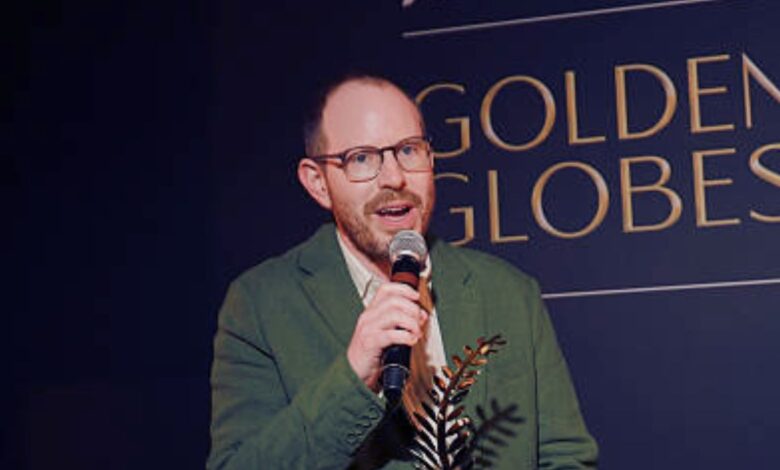
When people talk about modern horror, emotional storytelling, or movies that stay in your mind for days, the name Ari Aster always comes up. He is one of the few filmmakers who can make a story feel scary, funny, sad, and meaningful all at the same time. Even if you don’t know all his films, you have probably heard about Hereditary, Midsommar, or his newer movies like Beau Is Afraid and Eddington. These movies are more than simple horror. They feel like deep psychological stories about family, grief, trauma, and what it means to be human.
In this Article, we will look at who Ari Aster is, where he comes from, how he became a filmmaker, and what makes his style so special. We will also talk about his short films, his childhood, and the themes that appear again and again in his work. Later, in the second half, we will explore his feature films, his production company Square Peg, and the bigger ideas that connect all his movies together.
Ari Aster’s Early Life: How a Shy Kid Became a Bold Filmmaker
Ari Aster was born on July 15, 1986, in New York City. He grew up in a Jewish artistic family. His mother, Bobbi Lurie, was a poet and visual artist. His father was a jazz musician. So from the very beginning, Aster lived in a home full of creativity and expression. He also had one younger brother, and the family moved several times — first to England and later to New Mexico.
Aster has talked many times about how shy he was as a child. He struggled with a stutter and often felt like an outsider. Instead of talking a lot, he spent most of his time watching movies. He rented every horror film he could find. He even said that he “exhausted the horror section of every video store.” While other kids were outside playing, he was sitting in front of the TV trying to understand why certain scenes felt so scary or emotional. This small detail says a lot about who Ari Aster would become — someone who thinks deeply about fear, emotion, and storytelling.
In New Mexico, where he lived from age ten, he discovered even more movies. He devoured films like Rosemary’s Baby, Don’t Look Now, Blue Velvet, and A Clockwork Orange. At first, he didn’t even like some of them. They felt strange, mean, or uncomfortable. But instead of forgetting them, he watched them again and again to understand why they made him feel that way. This habit — revisiting difficult and emotional material — later became a huge part of his filmmaking style.
From Writing Scripts to Film School: A Dream Starts Taking Shape
By the time Ari Aster was in high school, he had written six full-length screenplays. Imagine being a teen and already writing full movies! He didn’t film them, though. He said he was too shy to ask people to act in them, and he didn’t want to make something that looked “amateur.” So instead, he kept writing alone and dreaming quietly about the day he could make movies for real.
His next big step was going to the College of Santa Fe (later called the Santa Fe University of Art and Design). He studied film, wrote movie reviews for a local arts magazine, and finally started making short films. One of these student films helped him get accepted into the famous AFI Conservatory in Los Angeles, where he earned his MFA in directing.
AFI was the place where things changed for him. He learned how to turn his ideas into actual films. He also made important friendships with other filmmakers like cinematographer Pawel Pogorzelski and producer Alejandro de Leon — people who would later help shape the look and feel of his feature films.
Ari Aster’s Short Films: Small Projects with Huge Impact
Before Ari Aster made any big movies, he created a set of short films that already revealed who he was as a storyteller. These shorts were bold, strange, emotional, and often disturbing. They explored taboo topics, complicated family relationships, and the hidden darkness inside people — themes that later appeared in Hereditary, Midsommar, and Beau Is Afraid.
One of his most famous shorts is The Strange Thing About the Johnsons (2011). It tells the story of a father being abused by his son. The film went viral because of its shocking subject, and it caused a lot of debate online. But it also showed that Aster wasn’t afraid of discomfort. He used horror not just for scares but to explore emotional pain, family trauma, and taboo subjects that most storytellers avoid.
He also made other shorts like Munchausen, Basically, The Turtle’s Head, and C’est La Vie. These films mix dark humor, horror, psychological tension, and strange characters. If you watch them now, you can clearly see the early version of Aster’s style — slow pacing, strong visuals, careful lighting, emotional tension, and a mix of horror and humor.
The Beginning of a New Wave in Horror
By the time Ari Aster released Hereditary in 2018, he was already known in film circles. But Hereditary changed everything. It shocked audiences, critics, and the whole horror world. Many people now call Aster part of the “elevated horror” movement along with Jordan Peele and Jennifer Kent — filmmakers who mix horror with deep psychological themes and powerful drama.
Aster’s movies don’t use cheap jump scares. They use emotional fear. They make you think about grief, trauma, family secrets, inherited pain, and what happens when people lose control of their lives. Even when something scary happens, it feels meaningful, not random.
Ari Aster and the Rise of His Feature Films
After years of writing, studying, and directing short films, Ari Aster finally made his first feature film, Hereditary, in 2018. This movie changed the horror world. It was not just scary. It was emotional. It was painful. It was about a family falling apart because of grief, secrets, and inherited trauma. Many people left the theater shocked, but also moved. Some critics even said it was one of the best horror films in years.
Aster worked closely with actor Toni Collette, who gave a powerful performance. The movie also used symbols, quiet moments, slow pacing, and a strong sense of dread. Nothing felt wasted. Every small detail mattered. This careful style became a major part of how people describe Ari Aster’s work today.
Right after Hereditary, Aster released Midsommar in 2019. This film surprised people because most horror movies take place at night. But Midsommar takes place almost entirely in bright daylight. There are flowers, green fields, smiling villagers, and sunny skies. Yet, the story feels uncomfortable and tense. This is one of the things people love about Ari Aster. He can make even the brightest places feel uneasy.
Midsommar also came from a personal place. Aster wrote it after going through a breakup. So the film mixes a breakup story with a strange Swedish ritual festival. It shows what happens when trust breaks, when love fades, and when people search for a place or a group where they feel safe. By mixing emotional pain with folk rituals and cult behavior, Ari Aster created a movie that feels both beautiful and disturbing at the same time.
Moving Into New Territory: Beau Is Afraid
In 2023, Ari Aster made a very different film called Beau Is Afraid. This movie is long, complex, and surreal. Instead of focusing on a family or a ritual group, the story follows one anxious man named Beau. He tries to make his way home to his mother, but everything around him feels strange, scary, and dreamlike. Some viewers loved the bold ideas. Others found the movie confusing. And many critics were divided.
Aster later said that he understood why the movie had mixed reactions. He admitted that the last hour might be too much for some people. But he also said he wanted to make something risky. Beau Is Afraid shows another side of Ari Aster. It shows that he does not want to repeat the same formula. He likes to explore new genres, new tones, and new emotions. Even if the film was not a financial success, it proved that he is not afraid to experiment.
Eddington: A Western for Our Time
In 2025, Ari Aster released Eddington, a satirical Western set during the early months of the COVID-19 pandemic. The story takes place in a small town in New Mexico and follows a sheriff, played by Joaquin Phoenix, and a mayor, played by Pedro Pascal. Their conflict reflects the tension, confusion, and division that many people felt in real life during that time.
Aster said he wrote the movie while the pandemic was actually happening. So the story is not nostalgic. It is not looking back with comfort. Instead, it shows how people lived through fear, doubt, and disagreement. It also explores ideas about online life, misinformation, and how people sometimes live in different realities because of the internet.
Eddington uses the style of a Western because Aster believes that the Western is the “national genre” of America. Westerns are often about building society, setting rules, and deciding who holds power. So using this style allowed Aster to explore the idea that the old systems might be breaking apart. Even though the movie did not make a large amount of money, it earned attention because it captured the feeling of a world changing very fast.
The Themes That Shape Ari Aster’s Work
One reason Ari Aster stands out is because he does not focus only on horror. He focuses on emotion. His films explore grief, fear, guilt, isolation, anxiety, and the ways people hide or avoid their true feelings. He often uses families, relationships, and small communities to show how people fall apart or slowly break under pressure.
Another strong theme in his work is ritual. He includes cults, ceremonies, old traditions, and symbolic acts. These rituals are not just strange visual elements. They represent control, belief, and the desire to escape personal pain by becoming part of something bigger. This idea appears in Hereditary, Midsommar, and even Eddington in different ways.
Aster is also known for his visual style. He uses long shots, slow camera movements, bright daylight, and detailed sets. Sometimes he builds whole worlds from scratch, such as the Swedish village in Midsommar. He likes to start with beauty and slowly reveal the fear and darkness underneath.
Aster’s Production Company and His Future Plans
Ari Aster and Lars Knudsen co-founded a production company called Square Peg in 2019. Square Peg has produced several films, including Dream Scenario, Sasquatch Sunset, Rumours, Bugonia, and more. The company has a first-look deal with A24, the studio behind all of Aster’s major films.
Aster has also talked about future projects. He has ideas for a musical, a sci-fi satire, a gangster epic, and even another horror film someday. He and animator Don Hertzfeldt are also working on an animated movie called Antarctica. This shows that Aster does not want to be trapped in one genre. He wants to explore everything.
Why Ari Aster Matters Today
Ari Aster has become one of the most meaningful filmmakers of this decade. His films spark strong reactions. Some people love them. Some do not. But almost everyone agrees that his work makes you feel something. He brings a mix of horror, humor, sadness, and humanity to the screen in a way that feels fresh and honest.
His stories are not just about fear. They are about people. They are about the pain we try to hide, the relationships we struggle to keep, and the things we do to avoid facing our own fears. His movies make us think, reflect, and sometimes even see ourselves in the characters he creates.
Ari Aster is still early in his career, and yet he has already changed the way many people think about horror and emotional storytelling. If his past work is any sign, the films he makes next will continue to push boundaries, explore new ideas, and keep surprising us.