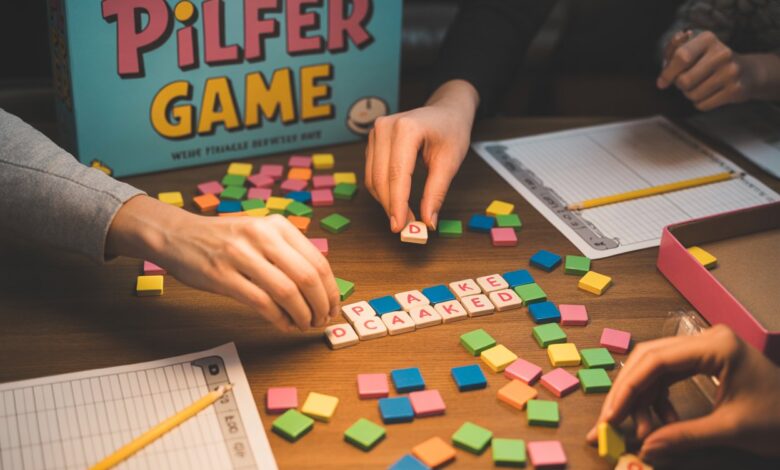
The Pilfer Game has rapidly transformed from a simple Merriam-Webster experiment into one of the most competitive and addictive real-time word games of 2026. Built around speed, vocabulary strength, and sharp strategic thinking, it blends anagram mastery with fast-paced multiplayer battles. As millions of players look for a smarter, quicker, and more interactive alternative to Scrabble, Boggle, or Words With Friends, Pilfer has become the new standard for vocabulary-based competition. Accessible, free to play, and integrated into the Merriam-Webster Dictionary app, it continues to dominate the word-game space with its unique mechanics and electrifying gameplay.
What Is the Pilfer Game?
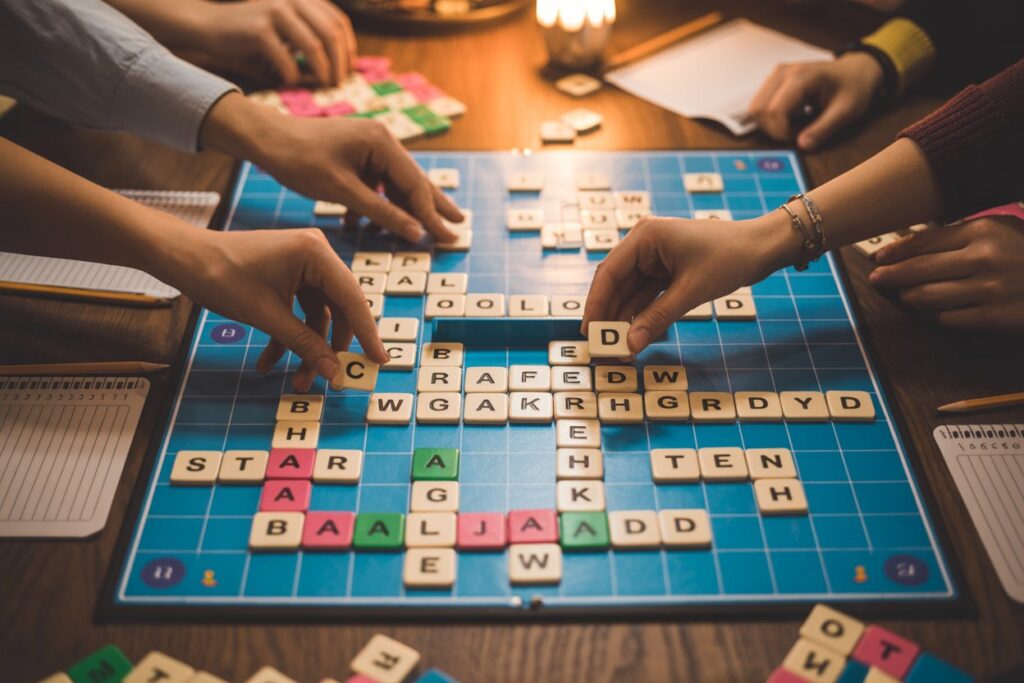
The Pilfer Game is a real-time multiplayer anagram battle created by Merriam-Webster. Each match uses a shared set of 60 letter tiles that drop into the play area for all players to see and use. Players must create valid English words of three letters or more, earning points based on the number of letters used. What sets the Pilfer Game apart is the ability to steal an opponent’s word by adding at least one new letter and rearranging the existing letters into a new word. This mechanic, known as pilfering, injects adrenaline, strategy, and unpredictability into every match.
As more players join public or private rooms, the game becomes a thrilling race of reflexes and cognition. Vocabulary lovers, students, educators, and competitive gamers alike are drawn to the dynamic nature of Pilfer, where every second matters and every letter can shift the entire match.
How the Pilfer Game Works
Understanding the Shared Tile System
Each match in the Pilfer Game uses exactly 60 tiles. These tiles appear one at a time, creating a constantly evolving set of opportunities. Advanced players keep track of the tiles to predict whether high-value letters like Q, Z, or X are still to come. Real-time awareness of the tile pool allows players to plan steals, defend their words, or create high-scoring combinations.
The Art of Word Creation
To score, players must create valid words from the letters in the central pool. Each letter in a completed word equals one point. Examples like forming EAT, TEA, or MAT may seem simple, but early in the game, they establish a foundation for longer steals later.
Pilfering: The Heart of the Game
Stealing is the core of the Pilfer Game and is what makes every match feel alive. When you pilfer a word, you add at least one new letter and rearrange the tiles to form a new, longer word. If an opponent plays EAT, you can take that word and form TEAM or MEAT. When you do this, you gain points for the longer word while the opponent loses the points from the original one. This creates what competitive players call a zero-sum point swing, a powerful scoring shift that can dramatically alter the leaderboard.
The S Rule and Other Restrictions
To keep the game fair and strategic, certain rules must be followed. Players cannot steal a word by simply adding an S to make it plural. For instance, turning TILE into TILES is not allowed. However, if the added S helps create a completely new word through rearrangement, such as TEAR becoming RATES, the system allows it. This encourages creativity and prevents easy, low-effort pilfers.
Advanced Mechanics and Strategic Depth
Self-Pilfering for Defense
Players can steal their own words. This tactic, known as self-pilfering, transforms shorter, vulnerable words into longer, harder-to-steal ones. For example, upgrading EAT into TEAM not only increases the score but also protects the word from being stolen easily. This strategy becomes essential in competitive lobbies.
Mastering Timing in Real-Time Battles
Since matches unfold in real time, speed plays a major role in success. The final 30 seconds after the last tile drops, known as the Final Countdown, can change everything. Skilled players often save potential steals, waiting for the perfect moment to strike when opponents least expect it.
Skill Buckets and Competitive Balance
As of 2026, the Pilfer Game uses a matchmaking system that places players into skill buckets. These buckets ensure fair matchups by grouping players with similar experience and performance levels. Newcomers are not placed against highly advanced players, while experts face worthy rivals capable of instant 6+ letter steals.
Bot Difficulty Levels
The game also offers a Play Computer mode. Bots range from beginner-friendly to extremely advanced. High-level bots can steal long words instantly, making them helpful training partners for serious competitors who want to refine their reflexes and strategies.
Where to Play the Pilfer Game
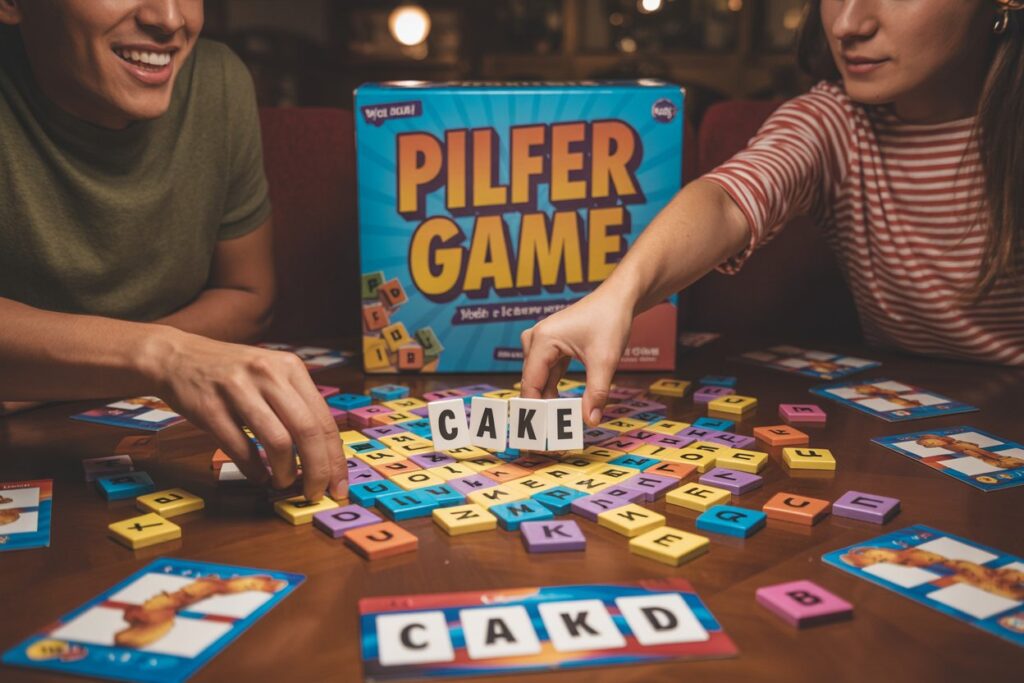
The Pilfer Game is available directly in your web browser on both PC and mobile devices. Since 2026, Merriam-Webster has integrated Pilfer into the official Merriam-Webster Dictionary app, allowing millions of players to enjoy the experience anywhere. Private rooms can be created through shareable links, making it easy to invite friends or challenge family members.
Competitive Culture and Player Appeal
The Pilfer Game appeals to a wide audience. Vocabulary lovers enjoy the linguistic challenge. Students use it to build spelling accuracy and expand their word knowledge. Competitive gamers appreciate the adrenaline and tactical depth. Educators use it for interactive learning sessions, and families treat it as an engaging bonding activity.
Players often compare the experience to Scrabble, Boggle, and anagram puzzles, but with the thrill of real-time competition. The psychological rush of pulling off a last-second steal creates unforgettable moments, especially in private matches or sibling rivalries.
Educational Value of the Pilfer Game
Beyond entertainment, the Pilfer Game strengthens core cognitive skills. It sharpens pattern recognition as players identify anagram possibilities quickly. It improves memory recall, spelling accuracy, and linguistic flexibility. Because the game requires mental agility under pressure, it serves as both a vocabulary trainer and a brain exercise.
Teachers have embraced Pilfer as a classroom tool because the fast pace keeps students engaged while subtly expanding their language abilities. Repeated exposure to new word patterns helps learners absorb vocabulary naturally.
Why the Pilfer Game Stands Out in 2026
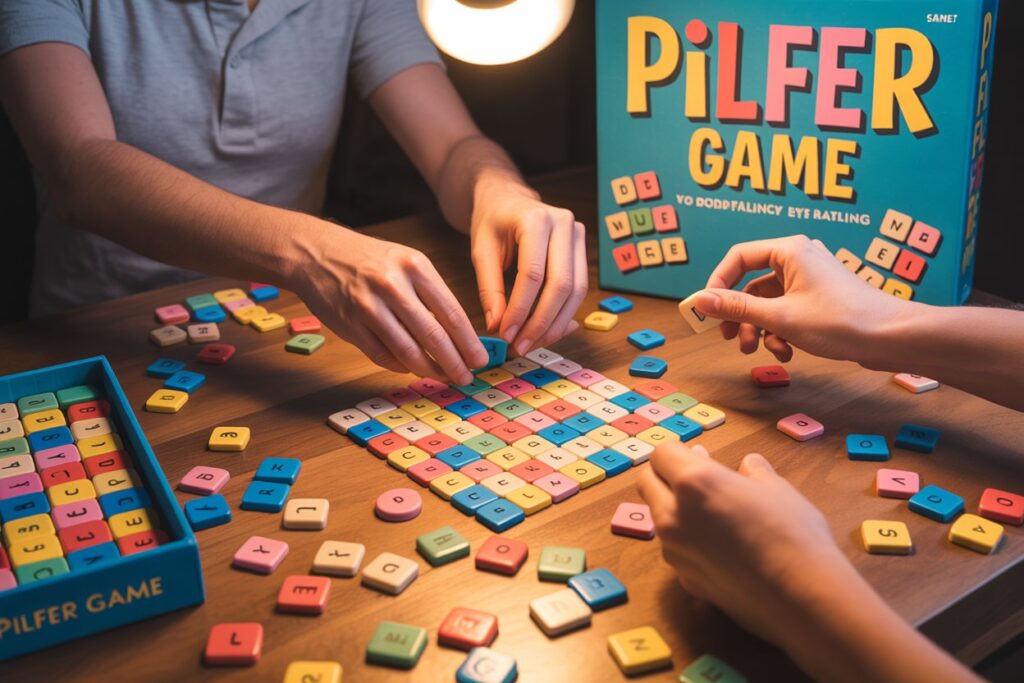
The Pilfer Game combines accessibility, intellectual challenge, and competitive intensity in a way few word games have achieved. Its real-time format, zero-sum scoring system, and strategic mechanics make every match feel unique. Whether you are playing casually, learning, competing, or training for speed, Pilfer offers a dynamic experience that adapts to your style.
FAQs
What is the Pilfer Game?
It is a real-time multiplayer word game by Merriam-Webster where players create and steal words using shared letter tiles.
Can you play Pilfer on mobile?
Yes, it works on mobile browsers and the Merriam-Webster Dictionary app on Android and iOS.
How do you steal a word in Pilfer?
You add at least one letter and rearrange the existing ones to form a new, valid word.
Is the Pilfer Game free to play?
Yes, the game is completely free on the Merriam-Webster platform.
Can you add an S to steal a word?
No, adding only an S is not allowed unless the letters form a completely new word through rearrangement.
Do all matches have the same number of tiles?
Yes, every Pilfer Game uses exactly 60 letter tiles.
What is the Final Countdown?
It is the final 30-second phase after the last tile appears, where players attempt late steals.
Who should play the Pilfer Game?
Students, vocabulary lovers, competitive gamers, families, and anyone looking to improve word skills in a fun, fast-paced way.