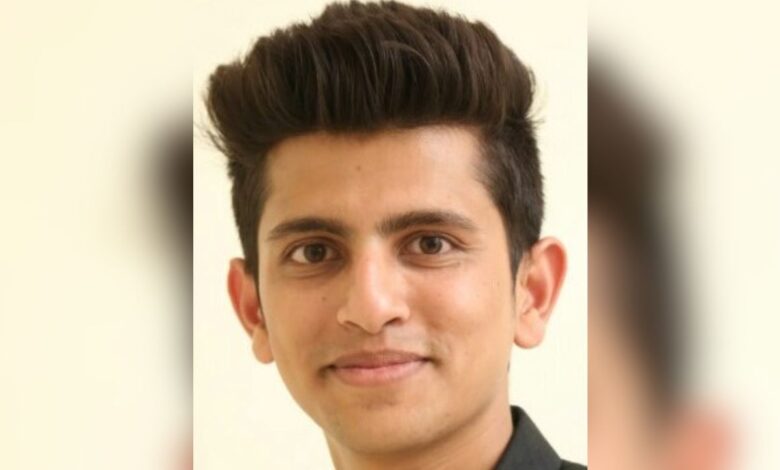
In today’s fast-moving world of engineering, some people stand out because of their focus, hard work, and love for what they do. One such person is Harsh Bhalia. His story is simple but inspiring. It shows how curiosity and steady learning can shape a great career in science and technology.
When you hear about engineers, you might imagine complex machines, energy systems, or futuristic research labs. Harsh Bhalia’s journey includes all these—but it’s also about patience, learning from experience, and exploring new ideas. Let’s take a closer look at how this young engineer from Gujarat, India, built a strong foundation and began his exciting career in thermal and mechanical engineering.
Early Education and Academic Growth
Every expert starts somewhere. For Harsh Bhalia, it began at RK University in Gujarat, where he studied mechanical engineering. From the very beginning, he showed a love for understanding how things work—why engines produce heat, how machines move, and how small design changes can improve performance.
He completed his Bachelor of Technology (B.Tech.) in Mechanical Engineering in 2015. This degree gave him not just theoretical knowledge but also hands-on experience. The university encouraged practical projects, teamwork, and innovation—something that matched Harsh’s personality perfectly.
After earning his B.Tech., Harsh decided to continue his studies. He enrolled for a Master of Technology (M.Tech.) in Thermal Science, also at RK University. This was not just another academic step—it was a clear choice that reflected his deep interest in heat transfer, energy systems, and sustainability.
By 2017, Harsh graduated with distinction, proving his dedication and skill. His M.Tech. program helped him explore how energy behaves in machines and how it can be used efficiently. In today’s world, where sustainability is becoming essential, this field has real value—and Harsh positioned himself right at its core.
From Learning to Doing: Early Work Experience
For many engineers, the real learning begins when theory meets practice. The same was true for Harsh Bhalia. After completing his studies, he began applying what he had learned in real-world settings. His early roles helped him understand how industries operate, how problems are solved on the ground, and how innovation happens in everyday engineering work.
One of his first professional experiences was as a Quality Engineer at Siddhi Engineers in Rajkot. Though this job lasted only two months in 2015, it played an important role in shaping his practical thinking. As a Quality Engineer, Harsh’s job was to make sure that every product met strict technical standards. He inspected machines, checked materials, and learned how tiny details can affect big systems.
It might sound simple, but quality control is a key part of modern manufacturing. Without it, even the best designs can fail. This short experience gave Harsh a strong base in precision, discipline, and analytical thinking—skills that every engineer needs.
After this, Harsh’s career took an exciting turn.
A Step into Research: The Institute for Plasma Research (IPR)
In August 2016, Harsh joined the Institute for Plasma Research (IPR) in Gandhinagar, Gujarat, as a Project Trainee. This was a huge milestone for him. IPR is one of India’s top research institutions, known for its work in plasma physics and high-energy research.
Working there wasn’t just another job—it was an opportunity to explore some of the most advanced areas of science. Harsh worked with experienced scientists and researchers on projects related to plasma technology and energy systems. He learned how energy flows in complex environments, how plasma can be used in future power solutions, and how scientific research can lead to real-world applications.
It’s not every day that a young engineer gets to contribute to such high-level research. For Harsh, this experience built confidence and gave him valuable exposure to research methods, data analysis, and innovation. It also connected his academic background in thermal science with practical, modern energy research.
Have you ever worked on something that made you feel part of something bigger? That’s exactly how this phase of Harsh’s journey felt—like a bridge between learning and contributing to the world.
Academic Projects that Showed True Innovation
While his education and work experience gave him knowledge, it was Harsh’s academic projects that showed his creativity and curiosity. He didn’t just study theories—he explored how those ideas could solve real problems.
One of his most notable works was his M.Tech dissertation, titled “Thermal Analysis of Screw-Barrel Assembly for Solid Argon Throughput.” Sounds technical, right? But in simple words, Harsh studied how heat moves through a system that processes solid argon—a material used in various advanced engineering and cryogenic applications. His goal was to improve the system’s thermal efficiency and reduce energy loss.
This research wasn’t just about numbers or equations. It showed Harsh’s ability to take a complicated system, break it down, and find ways to make it work better. Projects like these are what shape skilled engineers who can innovate, not just follow instructions.
Earlier, during his B.Tech studies, Harsh worked on another interesting project—“Refrigeration from Zeolite by Pedal Work.” Imagine using your legs to power a cooling system! This idea was about creating a pedal-powered, eco-friendly refrigerator using zeolite, a special mineral that can absorb and release heat. It was a creative, low-cost idea aimed at sustainable living—especially useful in areas without electricity.
These projects highlight one key thing: Harsh Bhalia isn’t just about machines and formulas. He’s about solutions—smart, practical, and sustainable ones.
The Power of Early Innovation
What makes Harsh’s story interesting is that he didn’t wait to finish school or get a big job to start innovating. He began experimenting and exploring during his student life.
This attitude shows something important—real engineers are curious by nature. They don’t just study for grades; they build, test, and learn from every experiment. Harsh’s early work proved that mindset. From improving thermal systems to designing human-powered refrigeration, he showed how small ideas can lead to big changes.
These experiences also helped him develop soft skills—like teamwork, communication, and creative thinking—which are just as important as technical knowledge. In every lab or research project, he learned how to collaborate with others and turn ideas into working systems.
Skills, Strengths, and Expertise
When we look at what makes Harsh Bhalia special, it’s clear that his skills go far beyond books and classrooms. He has built a strong mix of technical and practical abilities that help him stand out in the world of engineering. His background in both mechanical and thermal science gives him a deep understanding of how machines and energy systems work together.
One of his strongest skills is thermal science. He knows how heat moves through materials, how it can be controlled, and how to make machines more energy-efficient. This is a key skill in industries like manufacturing, energy, and research. He also has a sharp understanding of mechanical engineering, allowing him to design and improve systems that make everyday life smoother — from engines to cooling systems.
Along with technical knowledge, Harsh Bhalia has shown great project management abilities. Managing a research project or a technical experiment requires focus, teamwork, and patience. Harsh has handled complex academic and professional projects from start to finish, making sure everything is well planned and runs smoothly.
Quality and Precision in Work
Before many engineers find their true path, they often work in quality control — and that’s where Harsh learned one of his most valuable lessons. As a Quality Engineer at Siddhi Engineers, he learned that even small details matter. In engineering, a single loose part or a small calculation error can change everything.
This experience taught Harsh the value of accuracy, testing, and high standards. He became skilled at spotting issues early and solving them quickly. These habits later helped him during his research projects, where precision is even more critical. It’s this kind of attention to detail that separates a good engineer from a great one.
Think about it — how many times have you seen something fail just because one small step was skipped? Harsh’s story reminds us that success often comes from the quiet, careful work that nobody sees but everyone benefits from.
Research and Innovation Mindset
Research is about curiosity — asking “what if?” and “how can this work better?” For Harsh Bhalia, research is a natural part of who he is. His time at the Institute for Plasma Research (IPR) gave him the chance to see how science and engineering meet in real life. He explored plasma technology, which is one of the most advanced fields in modern energy research.
While working at IPR, Harsh didn’t just follow instructions. He learned to experiment, ask questions, and look for creative answers. He studied how energy behaves in extreme conditions and how it can be used for new technologies. This kind of thinking prepares him for future innovations — especially in energy systems, clean technology, and sustainable design.
In 2025, when the world is moving toward renewable energy and smart technologies, people like Harsh Bhalia play an important role. His mix of research knowledge and practical engineering helps bridge the gap between theory and real-world application.
Projects That Reflect Creativity
One of the best ways to see an engineer’s creativity is through their projects. Harsh Bhalia’s academic work is full of smart, problem-solving ideas. His project on thermal analysis of a screw-barrel assembly showed his ability to understand complex systems and find ways to make them better. It wasn’t just about calculations — it was about making machines more efficient and reliable.
Then there’s his project “Refrigeration from Zeolite by Pedal Work.” This idea is both simple and clever. It uses human power to create cooling, which means it can work even where electricity isn’t available. It’s a perfect example of sustainable thinking — using small ideas to make a big difference.
Through these projects, Harsh proved that innovation isn’t only about big inventions; it’s about practical ideas that solve real problems. His work reflects a mindset that every great engineer needs — to think beyond what already exists and to find new ways to improve life.
Personality and Approach
Behind the technical side of Harsh Bhalia, there’s a person who values learning, teamwork, and discipline. He is known for his calm and thoughtful approach. Instead of rushing through tasks, he takes time to understand problems and find the best solutions.
Harsh also believes in constant learning. Even after earning his M.Tech. with distinction, he continues to explore new ideas and technologies. In an age where engineering keeps evolving — from AI-driven design to clean energy — this mindset helps him stay relevant and forward-thinking.
He also values collaboration. During his studies and professional work, he has worked with many different teams — from fellow students to senior researchers. This has taught him that good ideas grow stronger when people work together and share knowledge.
A Growing Name in Engineering
In recent years, young engineers like Harsh Bhalia are becoming the backbone of modern industry. Their fresh thinking, openness to technology, and love for innovation are shaping how the world moves forward.
Harsh’s journey shows how a mix of strong education, good mentors, and a curious mind can lead to success. He started small, stayed patient, and built his career step by step. From classrooms to research labs, every phase added a new layer to his skills.
As industries focus more on sustainability and clean energy, professionals like Harsh are expected to lead projects that matter — projects that make machines greener, energy systems smarter, and technology more human-friendly.
Inspiration for Future Engineers
If you’re a student or a young engineer reading this, there’s a lot to learn from Harsh Bhalia’s story. It teaches us that success doesn’t come overnight. It grows from curiosity, patience, and the willingness to keep learning.
He reminds us that engineering is not just about machines or formulas. It’s about finding ways to make life better — cleaner energy, smarter systems, and practical designs. It’s about using knowledge to build a better tomorrow.
Harsh’s path from a small university in Gujarat to contributing at one of India’s leading research institutions shows that where you start doesn’t matter — what matters is how you grow, learn, and stay passionate about your work.
Conclusion
The story of Harsh Bhalia is more than just a resume — it’s a journey of learning, growth, and purpose. From his early days as a student at RK University to his research at the Institute for Plasma Research, he has shown what dedication and curiosity can achieve.
Today, he stands as a young engineer with strong technical skills, a deep sense of responsibility, and a clear goal — to make engineering more efficient, sustainable, and meaningful. His projects and achievements are not only personal milestones but also examples of how science can serve society.
As the world steps further into an age of smart technology and green innovation, engineers like Harsh Bhalia remind us why passion and persistence still matter most. His journey continues to inspire, showing that with the right mindset, even the most complex problems can find simple, brilliant solutions.