Why Is Custom Millwork Drafting the Backbone of Bespoke Interior Projects?
Walk into a luxury hotel lobby, a flagship retail store, or a high-end residential interior, and what truly sets the space apart is not just the layout, it’s the custom millwork. From tailored cabinetry and wall panels to reception desks and built-in furniture, these elements demand precision far beyond standard construction drawings.
This is where custom millwork drafting plays a critical role.
Custom millwork drafting transforms creative design concepts into accurate, build-ready technical drawings that fabricators and installers can trust. In an era where architectural detailing, sustainability, and digital collaboration are redefining the AEC industry, millwork drafting is no longer optional; it’s essential.
For architects, developers, contractors, and business owners across the USA and UK, investing in high-quality millwork drawings means fewer site errors, better cost control, and faster project delivery.
What Exactly Is Custom Millwork Drafting?
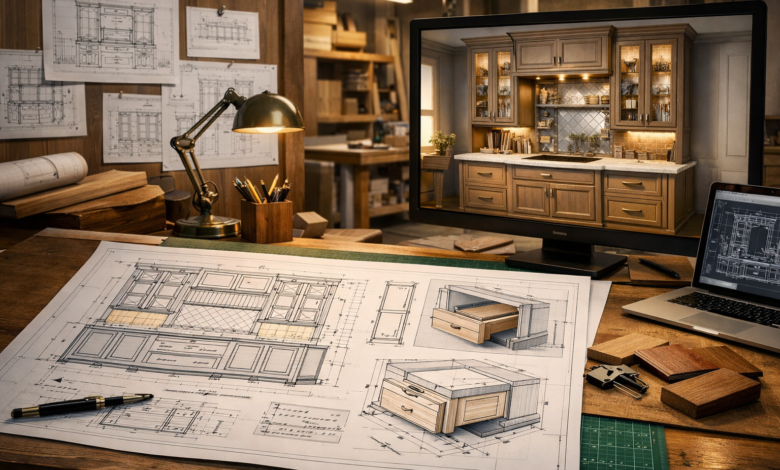
Custom millwork drafting refers to the creation of detailed CAD drawings that define how bespoke woodwork and interior components will be manufactured and installed.
Unlike generic shop drawings, millwork detail drawings capture:
- Exact dimensions and tolerances
- Joinery methods and hardware placement
- Material specifications and finishes
- Installation sequencing and fixing details
These drawings act as a single source of truth between designers, millwork engineers, fabricators, and site teams.
According to industry insights from Autodesk’s AEC research, projects using coordinated digital drafting workflows report up to 30% fewer construction errors, underscoring the value of precision documentation.
Why Is Custom Millwork Drafting in High Demand in the USA & UK?
1. Why Are Bespoke Interiors Becoming the New Standard?
In both the US and UK markets, clients increasingly expect unique, branded, and experience-driven spaces especially in:
- Hospitality and hotels
- Commercial offices
- Luxury residential developments
- Retail and mixed-use projects
Mass-produced solutions no longer meet aesthetic or functional expectations. As a result, demand for millwork drafting services that support one-of-a-kind designs continues to rise.
The global interior fit-out market is projected to grow steadily, driven by urbanization and renovation activity, as highlighted in Statista’s construction and interiors data.
2. How Do Tight Timelines Increase the Need for Accurate Millwork Drawings?
Time pressure is a defining challenge in today’s construction landscape.
Custom millwork drafting helps teams:
- Finalize designs earlier in the project lifecycle
- Avoid rework caused by ambiguous sketches
- Enable off-site fabrication while site prep continues
Well-developed millwork detail drawings reduce RFIs (Requests for Information) and keep schedules intact, a major advantage in competitive markets like London, New York, and major US metro areas.
How Does Custom Millwork Drafting Turn Design Ideas into Reality?
Step 1: Interpreting the Design Intent
Millwork engineers begin by analyzing:
- Architectural drawings
- Interior design concepts
- 3D renders and material boards
The goal is to preserve the designer’s vision while ensuring the concept can be built within real-world constraints.
Step 2: Developing Detailed Shop Drawings
This is where custom millwork drafting adds real value.
Detailed drawings typically include:
- Plan, elevation, and section views
- Exploded joinery details
- Hardware schedules
- Finish legends
Each element is drafted to fabrication-level accuracy, minimizing assumptions on the shop floor.
Step 3: Coordination with Other Trades
Millwork doesn’t exist in isolation.
Professional millwork drafting services ensure alignment with:
- MEP systems
- Structural elements
- Lighting and electrical layouts
This coordination helps prevent costly clashes during installation, one of the most common causes of project delays, as noted in McKinsey’s construction productivity reports.
What Are the Biggest Challenges in Custom Millwork Drafting Today?
1. Managing Complex Customization
Modern clients want flexibility adjustable shelving, integrated lighting, concealed storage, and sustainable materials.
Each customization adds layers of complexity to millwork drawings, requiring highly skilled millwork engineers who understand both design intent and fabrication realities.
2. Material Availability and Sustainability Requirements
With sustainability becoming a priority in the US and UK, millwork drafting must account for:
- FSC-certified wood
- Low-VOC finishes
- Reclaimed or engineered materials
Drafting teams must stay updated on evolving material standards while ensuring designs remain practical and cost-effective.
3. Bridging the Gap Between Design and Fabrication
One of the most persistent issues in millwork projects is miscommunication.
Poorly detailed drawings can lead to:
- Incorrect fabrication
- Site modifications
- Budget overruns
High-quality millwork detail drawings serve as a shared language across all stakeholders, reducing friction and misunderstandings.
How Is Technology Changing Custom Millwork Drafting?
Why Is 3D CAD and BIM Integration Gaining Momentum?
Traditional 2D drafting is no longer sufficient for complex millwork.
Today’s projects increasingly rely on:
- 3D CAD modeling
- BIM-compatible millwork drawings
- Clash detection and virtual walkthroughs
According to Autodesk BIM insights, BIM-enabled projects experience improved coordination and higher client satisfaction especially for interior fit-outs.
How Does Cloud Collaboration Improve Millwork Drafting Workflows?
With global teams working across time zones, cloud-based CAD platforms allow:
- Real-time drawing updates
- Faster approvals
- Transparent revision tracking
This is particularly valuable for international projects involving US-UK collaboration.
Who Benefits Most from Professional Millwork Drafting Services?
Custom millwork drafting supports a wide range of stakeholders:
- Architects – accurate documentation of design intent
- Interior designers – confidence that bespoke details will be built correctly
- Contractors – reduced site conflicts and smoother installations
- Business owners & developers – predictable budgets and timelines
For startups and fast-growing businesses, professional millwork drafting can be the difference between a space that merely functions and one that elevates brand identity.
What Should You Look for in a Custom Millwork Drafting Partner?
When evaluating millwork drafting services, consider:
- Proven experience with US and UK standards
- Strong understanding of fabrication processes
- Ability to produce highly detailed, build-ready drawings
- Familiarity with modern CAD and BIM tools
Skilled millwork engineers bring both technical expertise and problem-solving ability, a crucial combination in bespoke projects.
Why Custom Millwork Drafting Is an Opportunity, Not Just a Cost
Too often, millwork drafting is viewed as an overhead expense.
In reality, it’s an investment in risk reduction.
Well-executed millwork drawings:
- Lower rework costs
- Improve installation accuracy
- Enhance final build quality
- Protect design intent
As construction margins tighten, especially in competitive US and UK markets, precision drafting becomes a strategic advantage.
Conclusion:
As architecture and interiors continue to evolve, custom millwork drafting will play an even greater role in shaping distinctive, high-performance spaces.
With rising demand for bespoke interiors, sustainable materials, and digital collaboration, the future belongs to drafting teams that combine technical accuracy with design sensitivity.
For organizations seeking reliable outcomes on complex millwork projects, partnering with an experienced CAD design company, particularly one familiar with UK and international standards can quietly but significantly improve project success.
In the end, great millwork isn’t just about craftsmanship on site.
It starts with exceptional drawings that turn ideas into reality flawlessly.
FAQs
1. What is custom millwork drafting?
Custom millwork drafting is the process of creating highly detailed technical drawings for bespoke woodwork such as cabinetry, wall panels, counters, and built-in furniture. These drawings translate design concepts into precise, build-ready documentation used by fabricators and installers.
2. Why is custom millwork drafting important for construction projects?
Custom millwork drafting ensures accuracy, reduces fabrication errors, and prevents costly on-site modifications. It helps align architects, interior designers, millwork engineers, and contractors, leading to faster project completion and better quality outcomes.
3. What is included in millwork detail drawings?
Millwork detail drawings typically include dimensions, materials, joinery details, hardware specifications, finishes, and installation methods. They may also feature 2D elevations, sections, and 3D views to support accurate fabrication and coordination.
4. Who uses millwork drafting services in the USA and UK?
Millwork drafting services are commonly used by architects, interior designers, contractors, real estate developers, hospitality brands, retail businesses, and commercial property owners across the USA, UK, and international markets.
5. How do millwork engineers ensure build-ready accuracy?
Millwork engineers combine CAD expertise with fabrication knowledge. They coordinate with architectural, MEP, and structural drawings, apply industry standards, and account for real-world materials and tolerances to ensure drawings are ready for manufacturing and installation.
6. Is 3D CAD or BIM used in custom millwork drafting?
Yes. Modern custom millwork drafting often uses 3D CAD and BIM workflows to visualize complex details, detect clashes early, and improve coordination. This approach is increasingly common in large commercial and high-end interior projects in the US and UK.
7. How does custom millwork drafting reduce project costs?
Accurate millwork drafting minimizes rework, reduces material waste, prevents installation delays, and lowers the risk of design misinterpretation. This makes it a cost-effective investment rather than an added expense.