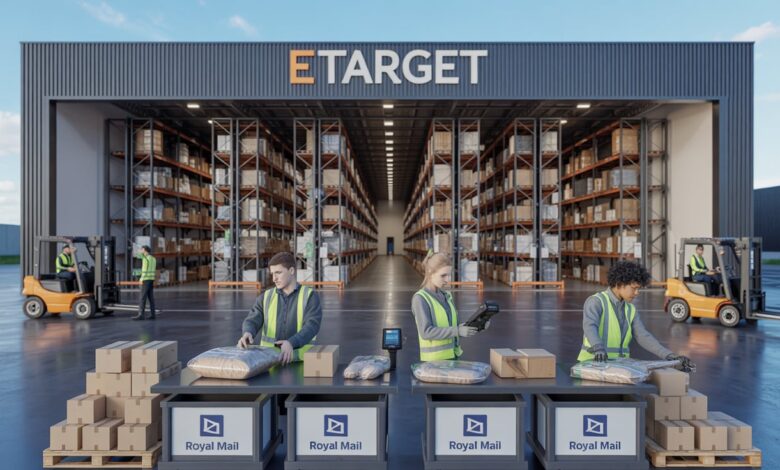
Receiving a parcel with the name eTarget Limited on it can be unsettling, especially when you don’t recognise the sender or recall making any purchase from a company by that name. Over the past few years, thousands of people across the UK have found themselves in this exact situation, sparking confusion, curiosity, and sometimes even fear. Conversations on social media, online consumer groups, and community forums have amplified the mystery, with many people wondering whether eTarget is a scam, a fake company, or some hidden seller operating in the shadows.
The truth is more nuanced. eTarget is a legitimate part of the modern e-commerce system, yet its name has become tangled in scam concerns, brushing schemes, and unexpected deliveries. This detailed guide breaks everything down in clear, simple language so you can understand exactly why eTarget appears on your parcel, what role the company plays, and how scammers sometimes misuse its identity. By the end, you’ll know exactly how to interpret an eTarget delivery — whether it’s something you ordered or something you didn’t.
What Is eTarget? A Complete Breakdown
The simplest way to understand eTarget is this: it is a third-party fulfilment and logistics company. That means eTarget doesn’t sell products directly to consumers. Instead, it supports online retailers by handling the physical side of their business — things like receiving stock, storing inventory, processing orders, packing items, printing labels, and arranging delivery through carriers such as Royal Mail.
Imagine an online seller who operates from another country or someone who simply doesn’t have the space, staff, or time to pack and ship every order themselves. Instead of managing all that complexity, they outsource the work to a fulfilment provider. That provider might very well be eTarget. So when you see eTarget’s name on a parcel, it usually means the company was responsible for sending the item on behalf of a seller whose name you do recognise.
This is why eTarget seems unfamiliar — you didn’t buy anything from them directly. But they were involved in getting an item from someone else at your door.
eTarget Limited (UK): Company Background and Registration
While many consumers believe eTarget suddenly “appeared out of nowhere,” the company has actually been operating since 2010. It is registered in the UK as a Private Limited Company (Ltd) and is based in Essex. On official records, eTarget is listed under SIC Code 70229, which refers to management consultancy services — a category that often covers companies with more flexible, service-based operations.
Over time, eTarget’s practical focus shifted toward fulfilment, warehousing, and shipment processing, especially for international sellers who needed a UK-based delivery partner. This type of evolution is extremely common in business, especially in the e-commerce world, where demand can quickly change direction.
The important facts are straightforward: eTarget Limited is a legally registered, active company. It operates within UK regulations and provides fulfilment services to both UK and international sellers. Its name appears on parcels not because it is secretly selling products, but because it handles the logistics.
What eTarget Actually Does in the E-Commerce Ecosystem
To understand why eTarget plays such an important role in online shopping, it helps to look closely at what a fulfilment company actually does. In the world of e-commerce, fulfilment is the process that begins the moment someone places an order and ends when the parcel arrives at their doorstep.
eTarget receives goods in bulk from sellers, often from countries like China, Hong Kong, Turkey, or various parts of Europe. Once the goods arrive at the fulfilment centre, eTarget labels them, stores them in an organised inventory system, and waits for orders. When you buy something from a marketplace such as Amazon or TikTok Shop, the order data is transmitted to eTarget’s warehouse. Staff members then locate the item, package it, attach the correct shipping label, and hand it over to a courier.
This means eTarget is effectively a “middle layer” between the seller and the customer — a service that ensures goods move smoothly through the supply chain. Without companies like eTarget, many small businesses and international sellers would struggle to deliver products efficiently in the UK.
Why eTarget Appears on Delivery Labels and Royal Mail Tracking
One of the biggest reasons people search for “What is eTarget?” is because their name appears unexpectedly on delivery labels. This happens for a simple reason: fulfilment providers often act as the sender in tracking systems, even when they are not the seller.
If a seller uses eTarget’s warehouse, the packaging and shipping process is handled entirely by eTarget. Shipping labels often include the fulfilment company’s name and address as the dispatch origin. This is common in e-commerce and not unique to eTarget — Amazon FBA, for example, frequently prints its own return labels even when the products are sold by third-party merchants.
For customers who assume the sender’s name should match the shop they purchased from, this can be confusing. But in reality, it simply reflects how modern online retail works: many different companies, tools, and teams are involved behind the scenes to get a product delivered.
The eTarget Parcel Mystery: Why People Receive Parcels They Didn’t Order
One of the most alarming situations for customers is receiving an unsolicited parcel with eTarget’s name on it. These parcels often contain very low-cost items — things like phone cases, makeup brushes, tiny toys, or plastic accessories. There’s no invoice, no branding, no explanation. It feels suspicious, and understandably so.
These unexpected deliveries are usually linked to a tactic known as a brushing scam. Although the term sounds dramatic, brushing itself does not involve direct financial theft. Instead, sellers send cheap items to random addresses so they can mark the order as “delivered” in the system. Once a delivery is logged, the seller can then write a fake “verified purchase” review on an online marketplace.
In other words, brushing is a dishonest way for sellers to boost their reputation and increase visibility. But it creates major confusion — especially for people who suddenly receive parcels they never ordered.
What a Brushing Scam Really Is — And Why Your Address May Have Been Used
A brushing scam works by exploiting ecommerce systems that require proof of delivery before allowing reviews. Sellers who want to cheat the system choose real addresses — often gathered from old purchases, minor data leaks, or marketing lists — and send extremely cheap items. Because the parcel technically arrives at a real address, the system counts it as legitimate.
This doesn’t mean your bank account has been accessed or that your identity has been stolen. It simply means your address was used without your consent. That said, it’s still unsettling, and it’s always smart to stay aware of how your personal information is being used.
Some people worry that brushing is a sign of something more serious, but for the most part, it is simply a shady marketing tactic rather than a direct attack on the recipient. eTarget’s role here is incidental — they are merely shipping orders placed by questionable sellers.
eTarget Royal Mail Text Messages: Legit or Fake?
Another source of confusion comes from Royal Mail text messages that mention eTarget. This has led many people to believe that eTarget is sending scam messages, which is not the case. What actually happens is that scammers imitate both Royal Mail and eTarget, combining the two names to create texts that look legitimate.
A genuine Royal Mail text is simple. It usually contains a tracking number and a delivery update but rarely includes a clickable link. Royal Mail never asks customers to pay additional fees or to enter sensitive information through a link.
Scam texts, on the other hand, often include urgent wording, unusual links, and requests for redelivery charges. Scammers borrow eTarget’s name in these texts because they know customers may have seen the name before, making the message seem more plausible.
This is where confusion becomes dangerous — because mixing a real company’s name with a real courier’s name can easily trick people who are expecting a parcel.
Is eTarget Real or Fake? The Truth Behind the Confusion
Many people assume eTarget is fake because of the increasing number of scam texts and unsolicited parcels. In reality, eTarget is a legitimate UK company operating within the law. They provide a genuine, widely used service for online sellers who need a UK-based logistics partner.
The confusion stems from three sources:
- Scammers misuse eTarget’s name in fake Royal Mail messages.
- Brushing scams cause people to receive unrequested parcels.
- Consumers are unaware of fulfilment partners, leading to surprise when a strange company’s name appears on a delivery label.
eTarget itself is not responsible for either brushing scams or scam texts. Their identity is simply used by others without permission.
How Scammers Borrow eTarget’s Name to Appear Legitimate
Scammers love using the names of real companies because it increases the chances that a victim will trust the message. eTarget is a perfect tool for scammers, because the name appears frequently on parcels connected with online purchases — yet most customers don’t personally know the brand.
This creates a psychological advantage for scammers. When someone receives a text saying “Your eTarget parcel is awaiting redelivery,” they may feel a spark of recognition. They may remember receiving an item or seeing the name on a label. That familiarity lowers the person’s defenses, making the scam more effective.
Scammers also rely on the fact that eTarget is not a household name. Consumers are unsure what the company does, so they assume the message may be legitimate. This blend of familiarity and uncertainty is exactly why scammers exploit eTarget’s name.
What to Do If You Receive an eTarget Parcel You Didn’t Order
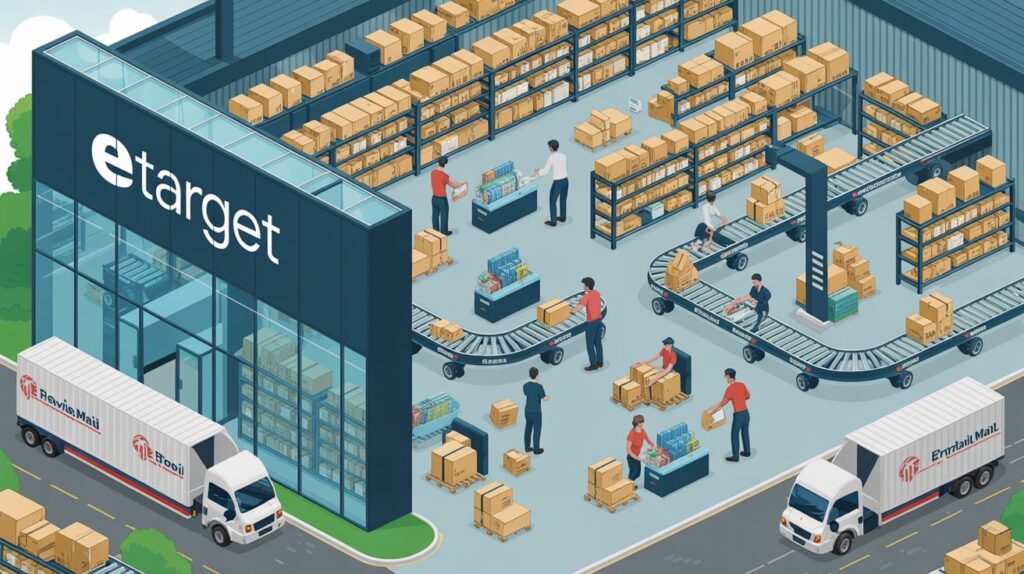
If an unexpected parcel shows up at your doorstep, your first reaction might be panic. But most of these situations are harmless. The best thing to do is pause, take a breath, and investigate calmly.
Start by checking your recent order history across online marketplaces. Sometimes, people forget small purchases or share accounts with family members who placed an order. If nothing matches, examine the parcel for clues — an invoice, a return address, or product details.
If no explanation can be found, the parcel is likely part of a brushing scam. You do not need to return it, nor do you need to pay anything. UK law considers unsolicited items to be legally yours to keep.
However, if the situation feels suspicious or if you begin receiving repeated parcels, it may be worth reporting the issue to Royal Mail, the platform you often shop on, or Action Fraud UK.
How eTarget Helps Global Sellers Deliver Products Faster
Behind all the confusion and misunderstanding lies an important truth: eTarget plays a major role in supporting small businesses, overseas sellers, and independent online shops. Without fulfilment partners like eTarget, many sellers wouldn’t be able to reach UK customers at all.
International sellers rely on eTarget for importing goods, storing inventory, and shipping items quickly through UK-based couriers. This makes it easier for online businesses to grow without renting warehouses or hiring staff. It also ensures that customers in the UK receive products faster than they would if items were shipped directly from overseas with long wait times.
Essentially, eTarget is part of the engine that keeps e-commerce functioning smoothly — even though most consumers never hear their name until it appears unexpectedly on a parcel.
Legal and Ethical Questions About Brushing and Data Use
Brushing exists in a legal grey area. The act of sending an unsolicited parcel is not illegal, but the practice violates the rules of major marketplaces like Amazon and eBay. The bigger concern is how sellers obtain the addresses used for brushing. Sometimes they come from prior legitimate purchases, and other times from outdated marketing databases.
eTarget itself is not responsible for the unethical decisions of sellers. They ship parcels based on orders that come through the system, without knowing that some orders are part of a brushing scheme. That said, fulfilment companies may face increasing pressure in the future to screen orders more thoroughly to prevent abuse.
Why Searches for “eTarget” Are Exploding Across the UK
Search interest in eTarget has skyrocketed because more people are receiving unfamiliar parcels and more scammers are using the name in fraudulent messages. Another factor is the rapid growth of platforms like TikTok Shop, which rely heavily on third-party fulfilment partners in the UK to handle their deliveries. As e-commerce expands globally, companies like eTarget become more visible to customers, even when the customers did not directly choose them.
So while eTarget remains mostly invisible in the typical shopping experience, modern search behaviour has brought it into the spotlight.
Conclusion
The mystery surrounding eTarget becomes much clearer once you understand how fulfilment companies operate and how scammers exploit real company names for credibility. eTarget is a legitimate part of the e-commerce ecosystem, providing essential logistics services to online sellers globally. The confusion arises mainly from brushing scams, unexpected parcels, and fake Royal Mail messages that misuse the company’s identity.
If you ever receive an eTarget parcel you don’t recognise, remember that it’s usually harmless. The key is to stay calm, investigate your online orders, and avoid clicking links in unsolicited texts. With awareness and caution, you can stay safe and navigate the modern world of online shopping with confidence.
FAQs
1. Why does eTarget’s name appear on my parcel?
Because eTarget is the fulfilment company that packaged and shipped the item on behalf of a seller, even if the seller’s name does not appear on the label.
2. Is eTarget a scam company?
No. eTarget is a legitimate UK-registered company. Scammers simply misuse its name to make fraudulent messages appear more believable.
3. Why did I receive a parcel I didn’t order?
This is often due to a brushing scam, where random items are shipped to addresses to generate fake “verified purchase” reviews.
4. How do I know if a Royal Mail text about eTarget is real?
Real Royal Mail messages do not ask for payment and rarely include clickable links. Always verify tracking numbers directly on Royal Mail’s official website.
5. Do I need to return or pay for unsolicited parcels?
No. Unsolicited items are legally yours to keep, although reporting suspicious activity is always a good idea.