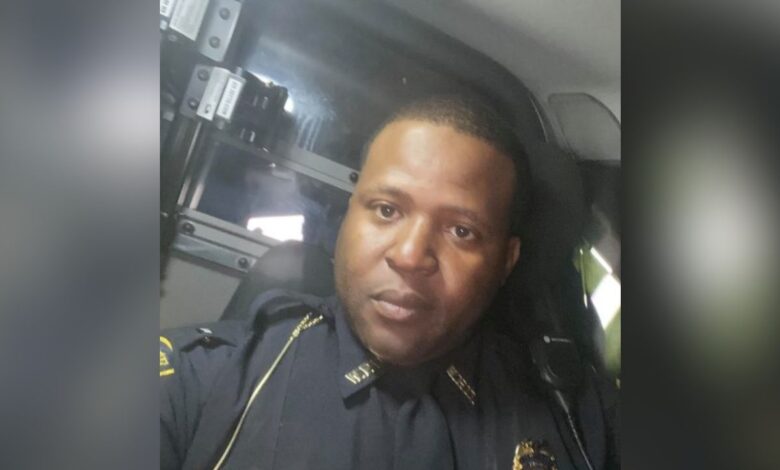
When you hear the name Sergeant Deliford, you might picture a strong soldier, a family man, and someone chasing a better future. And in many ways, that picture is true. But the real story of Sergeant Deliford is bigger, deeper, and filled with moments that show how life can pull a person in very different directions. His story begins in Miami during the Iraq War years and stretches all the way to local police departments in Georgia, with many twists in between.
To understand him today, we have to go back to the beginning — back to Miami, where young men and women felt trapped by crime, poverty, and fear. Back then, the U.S. Army worked hard to bring new people in, even when many were scared of going to Iraq. And right in the middle of that world was a young man named Anderson Quinton Deliford Jr., who was only twenty-three, already a husband, and already a father to three children.
A Young Man in Miami Looking for a Way Out
Miami in the early 2000s was not an easy place. Crime was high, jobs were low, and the Iraq War was on every TV screen. Army recruiters like Sergeant Michael Bass, Sergeant Vivian Fraim, and Sergeant Everett Best walked through malls, smoothie shops, and busy streets trying to talk to young people about joining the military. They used simple words, warm smiles, and honest answers. But they also used a message that shocked many people:
“Miami is more dangerous than Iraq.”
This message worked. Crime in southern Florida was so high that some recruiters said the streets felt like a “war zone.” And that is where Sergeant Deliford enters the story. As a young father with bills to pay and dreams he could not reach, he listened. He needed a way to support his family. He needed college tuition. He needed a path forward. The Army offered exactly that — free tuition, a $10,000 bonus, and a stable future.
Recruiters like Sgt. Fraim even trained him in the mornings to help him pass his physical tests. That is how much pressure there was to bring new recruits in. Re-enlistments were dropping, inactive soldiers were being recalled, and the military needed people badly. So when Sergeant Deliford joined, it felt like a new chance — a way out of a tough neighborhood and into a safer, stronger future.
From Army Service to Local Police Work
After serving, Sergeant Deliford returned to Georgia and tried to build a life in law enforcement. He worked at the Georgia State Prison, then at the Liberty County Sheriff’s Office, and later at the Walthourville Police Department. Each place offered hope, but also brought new problems. There were complaints about slow responses, wrong reports, and even sleeping in the patrol car. There were issues with false statements, incorrect information on citations, and trouble following the chain of command.
Some of these problems turned into official investigations. Some led to demotions. Others led to termination. But through every challenge, one part of his identity stayed solid: his role as Sergeant Deliford in the Georgia Army National Guard. That side of him showed discipline, structure, and pride.
This mix — strong military identity on one side and unstable police career on the other — is a key part of understanding his story.
The Reidsville Chapter Begins
By 2021, Sergeant Deliford joined the Reidsville Police Department in Georgia. But trouble appeared fast. From reckless driving without lights to writing the wrong speed zones on citations, the issues added up. His chief, Stacey Wilds, listed many policy violations. The city attorney, DuAnn Cowart-Davis, also recommended removing him.
But something unexpected happened.
Instead of firing him, Mayor Curtis Colwell used his legal powers to bring him back — even after two official recommendations to terminate him.
And that decision turned the entire case into a public story.
The Story of Sergeant Deliford: From Army Dreams to Police Trouble
When the mayor brought Sergeant Deliford back to the Reidsville Police Department, many people in the city were shocked. Some people agreed with the chief and the city attorney. They felt the list of mistakes was too long. Others believed everyone deserves a second chance, especially someone who had served in the military and in the Georgia Army National Guard. This mix of feelings made the story even more complex.
The mayor used a city rule that gave him the power to overrule the chief. This rule, found in Article III, Section 3.10 of the Reidsville Code of Ordinances, says the mayor can control hiring and firing of city workers. It also says the city council can override the mayor only if three or more members vote to do so. And in this case, the council did not override the mayor’s choice. So Sergeant Deliford returned to duty, even with all the problems listed in the violation report.
A Look at the Mistakes and Why They Mattered
The list of issues against Sergeant Deliford was long. It included reckless driving, wrong speed zones on citations, incorrect laws written on tickets, missing paperwork, slow responses to calls, and even TikTok videos filmed in uniform. Each small mistake added up. And when the chief sent him a message to write a full report about a stop-sign case, he did not reply at all. This was seen as insubordination, which means ignoring your boss on purpose.
To many people, these problems showed poor judgment. They also raised questions about safety. For example, writing the wrong OCGA law on a ticket can confuse drivers and courts. Missing citations can cause legal problems later. An invalid traffic stop caught on dash camera can lead to a citizen complaint. And sleeping in a patrol car or taking too long to respond to a 911 call can put people in danger.
Still, the mayor believed that Sergeant Deliford could improve. He believed the officer should get another chance. The mayor may have also seen the good in his military side — the part of him that served in the National Guard, worked in uniform, and trained under strict rules. This side of him had discipline. The police side, however, seemed to struggle.
Two Sides of One Person
What makes this story interesting is how different the two sides of Sergeant Deliford are. On one side, he is a father, a soldier, and someone who once joined the Army to escape the danger of Miami’s high crime. As a young man, he trained with strong recruiters like Sergeant Vivian Fraim, who helped him pass his tests. He wanted a better life for his family. And he earned his place as a Sergeant in the Georgia Army National Guard, where he still serves.
On the other side, his police career has been full of trouble. At the Georgia State Prison, he resigned. At the Liberty County Sheriff’s Office, he was fired for attendance issues and false statements. At the Walthourville Police Department, he was promoted, then investigated, then demoted, then fired again. Reports said he gave wrong information, misused time sheets, responded slowly, and even fell asleep on duty. And when he moved to the Reidsville Police Department, the same patterns continued.
This contrast raises a simple question:
How can one person be so strong in the military, but so troubled in police work?
Some people say the structure of the military suits him better. The rules are clear. The orders are simple. The chain of command is strict. Others say law enforcement is harder because you work alone, make fast decisions, and deal with unpredictable people every day. And some believe it is simply personal — that Sergeant Deliford needs more support, more training, or more supervision to succeed.
A Story About More Than One Man
The story of Sergeant Deliford is not only about one person. It also shows how cities handle police problems, how mayors use their power, and how hard it is to balance fairness with public safety. It also shows how a person’s past — like growing up in tough Miami streets, joining the Army, and raising a young family — can shape their future choices.
His story brings in so many of the themes we see today:
- Police accountability
- Training and discipline
- Public trust
- Military vs. civilian rules
- Mistakes and second chances
- Leadership and responsibility
It is a story that connects Miami, Georgia, the U.S. Army, Iraq War fears, and small-town police politics all in one path.
What Happens Next?
As of now, Sergeant Deliford continues to work, and the public keeps watching. Some still support him. Some still worry. His record is long, and his journey is complicated. But it is real, human, and honest. And it reminds us that every uniform has a person inside — a person with a history, a family, dreams, failures, and hope.
The story of Sergeant Deliford is not finished. It continues on each shift, each report, and each decision he makes from here on out. And like any story with many layers, it invites us to think about how people change, how they fall, and how they climb back up again.